Isabel Cisneros esculpe obras de arte con telas multicolores

Carmen Victoria Méndez 

El Nacional, 7 de junio 2013

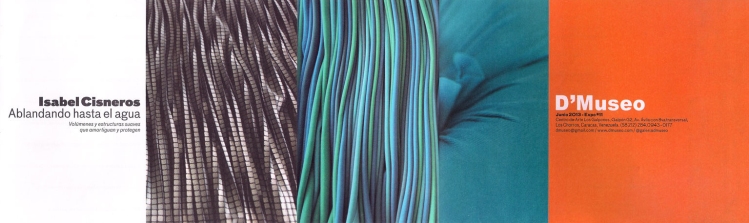
Algunas telas aportan volumen por sí mismas; otras, al plancharlas, adquieren las características de un papel para hacer origami. Isabel Cisneros propone una investigación de los materiales textiles para crear obras de arte contemporáneo en su individual más reciente, titulada Ablandando hasta el agua.

La exhibición reunirá 14 piezas en la galería D’Museo a partir del domingo.

Aunque se trata fundamentalmente de esculturas blandas, algunas terminaron transformándose en dibujos, por las características de las telas empleadas.

Hace varios años que Cisneros, ceramista de formación, decidió experimentar con materiales de costura. Lo hizo motivada por las limitaciones que tienen las artes del fuego en cuanto a disponibilidad de materiales.

Todavía hago cerámica. No lo puedo dejar, pero con las telas tengo la libertad del color y la liviandad que no me da la arcilla. La cerámica me apasiona pero siempre tengo la restricción del peso, la fragilidad y lo lento que es la producción de una pieza.

Las referencias de la artista a la hora de crear con telas son dos colombianas: Olga Amaral y María Fernanda Cardoso. Ha observado cómo manejan el espacio, la repitencia y las secuencias. El resto le viene dado de su propia formación como escultora y por la opacidad, brillantez, translucidez, liviandad, densidad o plasticidad que caractericen el tejido elegido en la mercería. Cisneros presenta, entre otras obras, un volumen en forma de flor elaborado con conos cosidos y organizados en columnas, hechos a partir de una malla que se emplea en la fabricación de calzados deportivos.

Con el paso de los años me ha ido gustando más ir probando materiales, ver cómo los puedo transformar en otras cosas para las que no estaban pensados.

Una de las piezas más llamativas es una instalación de 17 gallos hechos con cierres de colores. La artista mantuvo como referencia cromática la lata de aceite de oliva, una suerte de ícono pop en tierras venezolanas. Cisneros también exhibirá una serie de dibujos creados a partir de tules colgados en la pared, y 2 piezas concebidas como pinturas, hechas con nido de abeja sobre tafetán tornasolado. Hay obras tridimensionales que parten del sistema constructivo de las churuatas. En una de las creaciones el volumen viene dado por la presencia de lentejuelas; y en otra, por los dobleces a los que la artista somete el material. El color es una de las características más atractivas de la obra de Cisneros. Viene dado por los textiles. Me permito jugar con hilos encontrados de dos tonalidades diferentes. La ventaja es que en el país se consigue mucha tela, eso te activa mucho la cabeza. Es un mundo muy amplio y variado que tiene muchas características que como artista puedo aprovechar, desde el sistema de tejido y el hilo que se utiliza hasta las distintas gamas cromáticas. Eso te abre mucho campo para la experimentación.

Ablandando hasta el agua

 Matilde Sánchez, 2013

Ablandando hasta el agua

“Una estructura correcta conducirá inevitablemente a la belleza”
Pier Luigi Nervi
Hablar de la obra de Isabel Cisneros exige acercarnos a cada gesto estructural suyo más allá que como una fórmula matemática intangible que dibuja con resistentes trazos espacios construidos. Se nos plantea aceptar la invitación a palpar a escala particular aquellos entramados esenciales que componen la arquitectura como contenedora de experiencia humana.
Es en estos espacios de sutil corporeidad donde cada elemento, cada hilo convertido en frágil membrana, cada placa transformada en curvatura o en superficie aporticada sostiene y justifica su valor estético y lugar, donde se nos permite apreciar el poder de la verdadera creación en su nivel más íntimo: La intuición.
Isabel nos regala su amistad al presentarnos sus entrelazados y bien estructurados tejidos, sus originales y vaciadas formas semejantes a generosos cobijos, a texturas y tonalidades que parecieran extraídas de la naturaleza o tal vez de cualquier onírica imagen develada de nuestras recónditas memorias. Volúmenes, cilindros, superficies oblicuas, porosidades desnudas, pesos y contrapesos son apenas parte del gran despliegue del diccionario estructural que sin previo aviso nos hace habitantes de esos nuevos micro mundos. Materiales y formas de diversas densidades surgen en instantes con cada gesto nuestro al flexionar la materia creada, aproximándonos hacia sus resguardos repletos de combinaciones armónicas: Isa nos conduce a la gravitación de esa otra piel invisible contenedora de nuestras emociones más sublimes.
Gracias Isa.

A correct structure will inevitably lead to beauty”
Pier Luigi Nervi
Speaking of Isabel Cisneros’ work requieres to approach into each structural; gesture beyond as a mathematical formula that draws intangible spaces built with sturdy strokes. We are faced with accepting the invitation to be probed particularly those at critical lattices that make up the architecture as containg human experience.
It is in these spaces where each element subtle embodiment, each thread become fragile membrane, each surface transfonned into a curvature or vault sustains and justifies its aesthetic value and place, where we can appreciate the true power of creation in its more intimate level: intuition.
lsabel gives us her friendship when she develops their intertwined and well structured fabrics, its original and empty forms like generous shelters, textures and colols that seem drawn from nature or pelhaps any dream unveilled image from our hidden memories. Volumes, cylinders, inclined surfaces, naked porosities, weights and balances are just part of the great display of structural dictionary that make us inhabitants of these new micro worlds without notice. Materials and forms of various densities arise with each gesture by flexing the materials, approaching us to safe places full of harmonic combinations: Isa leads us to an invisible skin, which contains our most sublime emotions.
Thanks Isa.

Ojos para ver

Yolanda Pantin, 2013

Ojos para ver

¿Qué será lo que tanto valoro, lo que me llena de alegría cuando visito a Isabel Cisneros en su taller donde casualmente tienen su oficina los editores de Ratón y Vampiro? Son las pequeñas cosas que se van tejiendo en el arte de encontrar correspondencias.
Isabel mira lo que no vemos. Tiene esa facultad extraordinaria que en lo personal valoro en tiempos de ceguera. Tiene ojos para ver. Me viene a la mente la imagen de Santa Lucía o aquel frasco en el mercado de Mérida que de vez en cuando me golpea con su lleno vítreo para pedirme: Mira.
Sobre la mesa donde Isabel trabaja, entre fotografías personales que la generosa luz ha ido borrando sin pausas y sin prisa, hay un cuadrito que representa las manos de una mujer muy en la estética de los años 50´. ¡Es precioso! Tan pequeña y tan modesta ilustración como de revista primorosamente femenina, ¿de dónde lo habrá sacado? ¿por qué traigo ahora esa imagen cuando intento escribir sobre el arte de esta artista?
Será por las manos de las modistas. Todas las piezas de esta muestra están íntegramente realizadas en tela, las mismas que Isabel encuentra en las tiendas del ramo. Son esculturas que ella ha animado con hilo, aguja y dobleces. Es fantástica la manera cómo Isabel ha ido incorporando nuevos materiales, sacándoles provecho para hacer su obra. En su búsqueda, fue repasando los hornos, los muestrarios de las ferreterías, hasta terminar como la niña que sigue la pista en un cuento, delante de las puertas de una mercería. Todo tan prolijo, tan perfectamente ordenado en sus cajitas.
Adoro esos cuentos donde en el fondo está la madre, ese dar vueltas como en remolinos, en círculos, para llegar al centro buscando lo que se nos ha perdido, como ocurre en esta hilada historia animada en un principio por las obras de María Fernanda Cardozo, y Olga de Amaral.
Todo lo que ahora vemos surgió de la carencia, de lo que se acabó, de lo que ya no viene, y de lo que ahora abunda en el comercio: cerros de telas. Porque Isabel encuentra donde no hay. ¡Qué don el suyo! ¡Y qué fuerza cuando empezó a darle porosidad y flexibilidad a la arcilla para hacerla dúctil como una tela! Es así como se cierra el círculo con los pesados y majestuosos ropajes del Moliere de Ariane Mnouchkine, aquella maravilla, o los paños que minuciosamente doblaba en escena la actriz Nuria Espert en el montaje de Doña Rosita la Soltera que Isabel vio hace siglos en Caracas, o la alfombra roja donde desfila el arte de la alta costura, o atrás, muy lejano, el recuerdo de un closet de lencería.

Eyes to see

What is that I appreciate so much, what fills me with joy when I visit Isabel Cisneros in his workshop? It’s the little things that are woven in the art of matching.
Isabel sees what we don’t see. She has this extraordinary power that I personally appreciate in times of blindness. She has eyes to see. There comes to my mind the image of Santa Lucia, or that bottle Merida market that occasionally hits me with your full vitreous to ask : Look.
On the table where Isabel works, among personal pictures that have been blurred by the generous light without breaks and without hurry, there is a picture that represents the hands of a pretty women in the 50s’ aesthetics. It’s beautiful! So small and so modest magazine illustration, exquisitely feminine, where did he get ? Why bring that image now when I try to write about the art of this artist?
It will be by the hands of the dressmakers. All parts of this show are entirely made in fabric, founded in stores. These are sculptures animated with thread, needle and folds. It’s great the way Isabel has incorporated new materials, taking out to do his work. In her quest, she was going over the furnaces, the hardware samplers, ending as the girl who keeps track on a story in front of the doors of a haberdashery. Everything so neat, so well ordered in their boxes.
I love those stories where in the background is the mother, such as swirls spinning in circles to get to the center looking for what we have lost, as in this animated tale spun at first by the works of Maria Fernanda Cardozo, and Olga de Amaral.
All you now see came from the lack of what became of what no longer is, and what now abounds in trade: hills of fabrics. Because she found where there is nothing. What a gift! And what force when he started to give flexibility and porosity to clay to make it soft like fabric! Thus, the circle is closed, with heavy and majestic robes of Moliere Ariane Mnouchkine, that wonder, or cloths that folded carefully stage actress Nuria Espert in the assembly of Doña Rosita the Single that Isabel saw years ago in Caracas, or the red carpet with the haute couture, or backward, far away, the memory of a linen closet.

ISABEL CISNEROS, ABLANDANDO HASTA EL AGUA

susana Benko, Art Nexus, # 91, Volumen 12, Pags. 114-5, diciembre 2013-febrero 2014

The exhibition entitled Ablandando Hasta el Agua (Softening Even Water) by artist Isabel Cisneros (Caracas, 1962) opened to the public from June 9 to July 7 of this year at the Galería D’Museo in Caracas. It was a remarkable exhibition because of the unusual quality achieved with the fabrics used to render the soft sculptures. Indeed, these pieces are the result of a process of investigation and experimentation with materials that has been pursued by Cisneros throughout her artist trajectory.

A ceramist by trade, her earlier projects consisted on assembling small monochrome clay pieces that, as the units that made the whole, conferred great plasticity to her work. By using these clay pieces or other ones developed later with mundane small objects—like buttons, beads, glass beads, etc.—she is able to obtain similar results: the creation of malleable objects that resemble living organisms of a hybrid nature. By mastering the assembly of a variety of materials that small in size permits Cisneros to create flexible, “modifiable,” pieces that alter the traditional concept of the sculptural “mass.” The forms by Isabel Cisneros are intended to be manipulated by the viewers. The result is a unique and diverse piece that responds to the aesthetic criteria conferred to them by the artist.

Both in her earlier works, and now in her most recent proposals, Cisneros bends and “spins” several elements to create forms. Ultimately, it is about generating volumes with a criterion that follows the processes usually associated with textiles. In earlier projects Cisneros “sewed” the small ceramic pieces with steel or nylon thread to create the organic-like forms that define her style. On this occasion, she works with entire fabrics—a single piece—to establish a relationship between the resulting matter-form with the softening of hard water (desalination or decompensation).

During the process of creating this works Cisneros discovered new formal possibilities offered by the material, as she was able to take advantage of textures, shines, patterns and colors. According to the artist “The more I manipulated these fabrics, the more surprised I became about their thickness, textures and colors. Each fabric could be folded to create density, or spread to underscore its lightness, or be twisted on itself. And those are the backstitches that sew my unstoppable desire to touch fabrics and the incomprehensible geometries that live in my head.” By taking advantage of the fabrics’ colors, patterns, textures, densities, transparencies, shines and opacities, the artist was able to create a variety of forms that stood out because of the particular characteristics that each piece of cloth offered. The creases and the soft forms result from Cisnero’s approach to compose the work as if it were a painting; that is, by maintaining a pictorial approach to the rendering of color and, of course, by sensing volume without the need to sculpt it. Her chosen approach is emotional and sensual, as they ultimately are strongly sensorial pieces that, on the one hand, sharpen the sense of sight—through the shine, textures and colors of the fabric—and, on the other, because they highly corporeal tactile works and, thus, malleable.

But aside from the forms, there is the ludic nature of the work that emerges from an understanding of the material’s attributes. Such understanding is manifested in forms that allude to other realities expressed though the typology of the fabrics and the manner in which the creases are done. This results in pieces like Corroncho (Catfish, 2013), a brownish-gray fish from the family of the ray-finned fish suggested in a brown moiré taffeta fabric; Cocodrilo(Crocodile, 2013) a piece that—created with the same type of fabric but blue instead of brown—appears to be dozing over a surface; Palmeros (2013), in which the “branches” emerge from a handful of zippers sewn with cotton; or Alcantárea (2013), in the assembly of pieces made with 3D mesh—a translucent material used in the fabrication of sport shoes—resulted in a sort bromelia of particular beauty because of its color, Nonetheless, the relationships between these forms and certain elements of nature are not premeditated. The original concept at the beginning of the execution of the pieces is abstract, given that Cisneros has no preconceived images to work with. If the results permit, the material offers a guide to establish associations,

Other referents that appear are those that are already part of the history of art: two assemblies in blue and green Lycra that hang like “dripping bodies” on the wall (Munch, 2013), are reminiscent of the languid and desperate figure from the series The Scream (1893), by Norwegian artist Edvard Munch; or, the integration of white and black tulles in Graffito (Grafito. 2013), creates a chiaroscuro-like effect precisely because of its translucency. These associations are generated by the resulting forms and by the inherent visual attributes of the materials.

Ablandando hasta el agua is, to a certain extent, an interactive experience, not solely because of the mutable nature of the pieces, but also because they trigger the imagination of viewers and new ideas.

Cestas del siglo XXI

José Roberto Coppola

El Nacional, 27 de enero 2013
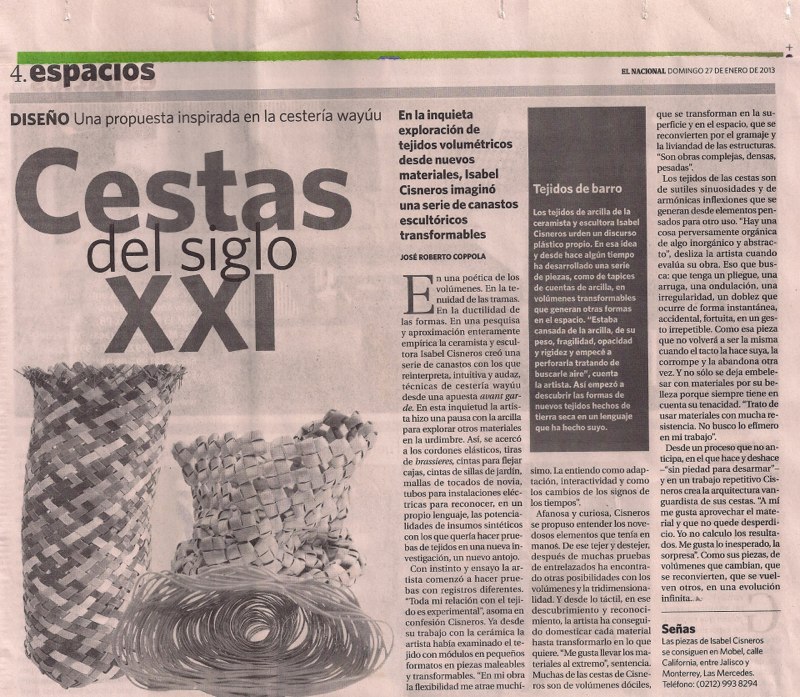
Cestas del siglo XXI

La ceramista y escultora Isabel Cisneros reinterpreta técnicas de cestería wayúu desde una apuesta avant garde.

En la inquieta exploración de tejidos volumétricos desde nuevos materiales, Isabel Cisneros imaginó una serie de canastos escultóricos transformables

En una poética de los volúmenes. En la tenuidad de las tramas. En la ductilidad de las formas. En una pesquisa y aproximación enteramente empírica la ceramista y escultora Isabel Cisneros creó una serie de canastos con los que reinterpreta, intuitiva y audaz, técnicas de cestería wayúu desde una apuesta avant garde. En esta inquietud la artista hizo una pausa con la arcilla para explorar otros materiales en la urdimbre. Así, se acercó a los cordones elásticos, tiras de brassieres, cintas para flejar cajas, cintas de sillas de jardín, mallas de tocados de novia, tubos para instalaciones eléctricas para reconocer, en un propio lenguaje, las potencialidades de insumos sintéticos con los que quería hacer pruebas de tejidos en una nueva investigación, un nuevo antojo.

Con instinto y ensayo la artista comenzó a hacer pruebas con registros diferentes. “Toda mi relación con el tejido es experimental”, asoma en confesión Cisneros. Ya desde su trabajo con la cerámica la artista había examinado el tejido con módulos en pequeños formatos en piezas maleables y transformables. “En mi obra la flexibilidad me atrae muchísimo. La entiendo como adaptación, interactividad y como los cambios de los signos de los tiempos”.

Afanosa y curiosa, Cisneros se propuso entender los novedosos elementos que tenía en manos. De ese tejer y destejer, después de muchas pruebas de entrelazados ha encontrado otras posibilidades con los volúmenes y la tridimensionalidad. Y desde lo táctil, en ese descubrimiento y reconocimiento, la artista ha conseguido domesticar cada material hasta transformarlo en lo que quiere. “Me gusta llevar los materiales al extremo”, sentencia.

Muchas de las cestas de Cisneros son de volúmenes dóciles, que se transforman en la superficie y en el espacio, que se reconvierten por el gramaje y la liviandad de las estructuras. “Son obras complejas, densas, pesadas”.
Los tejidos de las cestas son de sutiles sinuosidades y de armónicas inflexiones que se generan desde elementos pensados para otro uso. “Hay una cosa perversamente orgánica de algo inorgánico y abstracto”, desliza la artista cuando evalúa su obra. Eso que busca: que tenga un pliegue, una arruga, una ondulación, una irregularidad, un doblez que ocurre de forma instantánea, accidental, fortuita, en un gesto irrepetible. Como esa pieza que no volverá a ser la misma cuando el tacto la hace suya, la corrompe y la abandona otra vez. Y no sólo se deja embelesar con materiales por su belleza porque siempre tiene en cuenta su tenacidad. “Trato de usar materiales con mucha resistencia. No busco lo efímero en mi trabajo”.
Desde un proceso que no anticipa, en el que hace y deshace –“sin piedad para desarmar”– y en un trabajo repetitivo Cisneros crea la arquitectura vanguardista de sus cestas. “A mí me gusta aprovechar el material y que no quede desperdicio. Yo no calculo los resultados. Me gusta lo inesperado, la sorpresa”. Como sus piezas, de volúmenes que cambian, que se reconvierten, que se vuelven otros, en una evolución infinita.

Tejidos de barro

Los tejidos de arcilla de la ceramista y escultora Isabel Cisneros urden un original discurso plástico. En esa idea y desde hace algún tiempo ha desarrollado una serie de piezas, como de tapices de cuentas de arcilla, en volúmenes transformables que generan otras formas en el espacio.

“Estaba cansada de la arcilla, de su peso, fragilidad, opacidad y rigidez y empecé a perforarla tratando de buscarle aire”, cuenta la artista. Así empezó a descubrir las formas de nuevos tejidos hechos de tierra seca en un lenguaje que ha hecho suyo.

Baskets of XXI century

In the restless exploration of volumetric tissue from new materials, Isabel Cisneros imagined a series of sculptural convertible baskets.

In a poetic volumes. In the dimness of the frames. In ductility of forms. In an entirely empirical approach research, ceramist and sculptor Isabel Cisneros created a series of baskets with reinterpreting, intuitive and bold, Wayuu basketry techniques from a bet Avant Garde. In this concern the artist paused with clay to explore other materials in the warp. So, she approached the elastic cords, bras straps, box strapping tapes, bridal meshes, electric pipes for state, in her own language, the potential of synthetic materials for test new textile patterns tissue, her new will.
With the artist’s instinct and testing, she began testing. ”My whole relationship with the tissue is experimental” Cisneros looms in confession. Since his work with ceramics artist had examined the tissue with smaller modules formats into a malleable and transformable pieces. ”In my work flexibility attracts me a lot. I understand it as adaptation, interactivity and changes by the signs of the time”.

Eager and curious, Cisneros aimed to understand the new elements that she held. In this weaving and unweaving, after many tests, she found other possibilities intertwined with the volumes and dimensionality. And from the tactile, in this discovery, the artist has managed to domesticate each material to transform it into what she want. ”I like to force materials to the edge” sentence. Many Cisneros baskets are docile volumes, which are transformed by the surface and space, which are reconverted by the weight and the lightness of the structures. ”These works are complex, dense, heavy”.
The baskets are woven with subtle harmonic intricacies and inflections that are generated from elements designed for another use. ”There is something unreasonably organic generated by something reasonably inorganic and abstract”, slide the artist when evaluating his work. What she looks for: a crease, a wrinkle, a ripple, an irregularity, a fold that occurs instantly, accidental, fortuitous, in a repeated gesture. A piece will never be the same when touch corrupted and leaves it again. And she’s not only enthralled by materials’ beauty, She always takes into account their tenacity. ”I try to use materials with much resistance. I seek not for the ephemeral in my work.”

From a process that does not anticipate, which she makes and breaks -”no mercy to disarm”- and repetitive work Cisneros creates avant-garde architecture of their baskets. ”I like to take advantage of the material and that it is not wasted. I did not calculate the results. I like the unexpected, the surprise”. As in her pieces: changing and reconverted, which become another in a infinite evolution.

Clay Textiles

Tissues from clay conceive an original artistic discourse. In this idea she has developed a number of pieces for some time, as clay textiles, convertible volumes that generate other forms in space.

“I was tired of the clay, its weight, fragility, opacity and rigidity and began to pierce it looking for air”, says the artist. Then, she began to discover new forms of fabrics made of dry land in her own language.
Transfiguraciones

En la búsqueda de flexibilidad y suavidad en las piezas, me propuse trabajar con “cerámica blanda”. No en el concepto común (cerámica cocida a baja temperatura) sino, contrariamente, llegar a la dureza de la porcelana pero trabajando las formas de manera que en formatos pequeño y con orificios se puedan entretejer, para armar piezas de muy diversas dimensiones (ya el tamaño del horno no limita) y con un movimiento muy libre, similar a de los textiles.

While I was in the quest for flexibility and softness in my pieces, I chose to work with ‘’soft clay’’. Not in the ordinary sense (baking clay with low heat), but achieving the hardness of porcelain, while at the same time working the shapes so that they can be interwoven in small formats and through holes, with the main objective of building pieces with diverse dimensions (the size of the oven is not a limiting factor anymore) and with a free movement, such as the one in textiles. 

por Eduardo Planchart Licea

Revista Esteka, # 11, Pags. 14-5, Santiago, Chile, 2011

“La arcilla es un material noble que permite hacer lo inimaginable. Se endurece y la puedes ablandar al mojarla, y tienes muchos recursos para manipularla, taparla con plástico o con trapos, precipitar su secado, etc. En ese sentido la arcilla es muy rica como experimento escultórico”. (Isabel Cisneros, testimonio, 2011)

Para Isabel Cisneros la creación artística es una tendencia inherente a su modo de ser, que la identifica con sus raíces familiares. Al coser la cerámica, une dos artes milenarias como la textil y las artes del fuego. En piezas como Vellocino de Oro(2006), nacidas de la inspiración, el ingenio y la tenacidad, crea cada fragmento de esta piel mítica tejida a través de una imperceptible trama.

La artista crea elementos cerámicos que permitan la articulación de las obras, evitando la fricción entre sí, de esta manera incorpora círculos y esferas tridimensionales.

La transformación, el repliegue sobre el ser el cambio y la adaptación, son necesidades para sobrevivir; es ésta una de las metáforas que están presente en este lenguaje plástico. Transgrede así el lenguaje cerámico, llevando el material a sus límites, tal como es propio de la enseñanza de la Bauhaus y del arte experimental.

Así, en las Anémonas, esculturas creadas por la artista en 2006, transforma el barro en escultura a través de formas que parecieran imposibles de ser modeladas, quemadas y tejidas en cerámica. Al acercarnos a estas piezas, dominadas por la protuberancia y lo acuático, pareciéramos encontrarnos ante destellos de fondos marinos.

Lo orgánico se materializa en el lenguaje escultórico de Isabel Cisneros desde sus primeras obras en piezas de cerámica, donde lo utilitario y lo artístico se fusionan en jarras abombadas con cuellos estrechos, imbuidas en la cultura ibérica. A fines de los noventa crea las piscinas, que señalan la dirección de sus futuras creaciones. En ellas domina lo femenino, pues son especies de cálices plenas vinculadas a lo receptivo, a lo curvo, a la fertilidad y al útero donde personajes renacen lúdicamente en su interior. En la ornamentación externa domina a senilidad, la multiplicidad en rayas y puntos polícromos que irán surgiendo en su lenguaje plástico, para transmitir movimiento a sus mantos y asumir visualmente la ligereza de la tela.

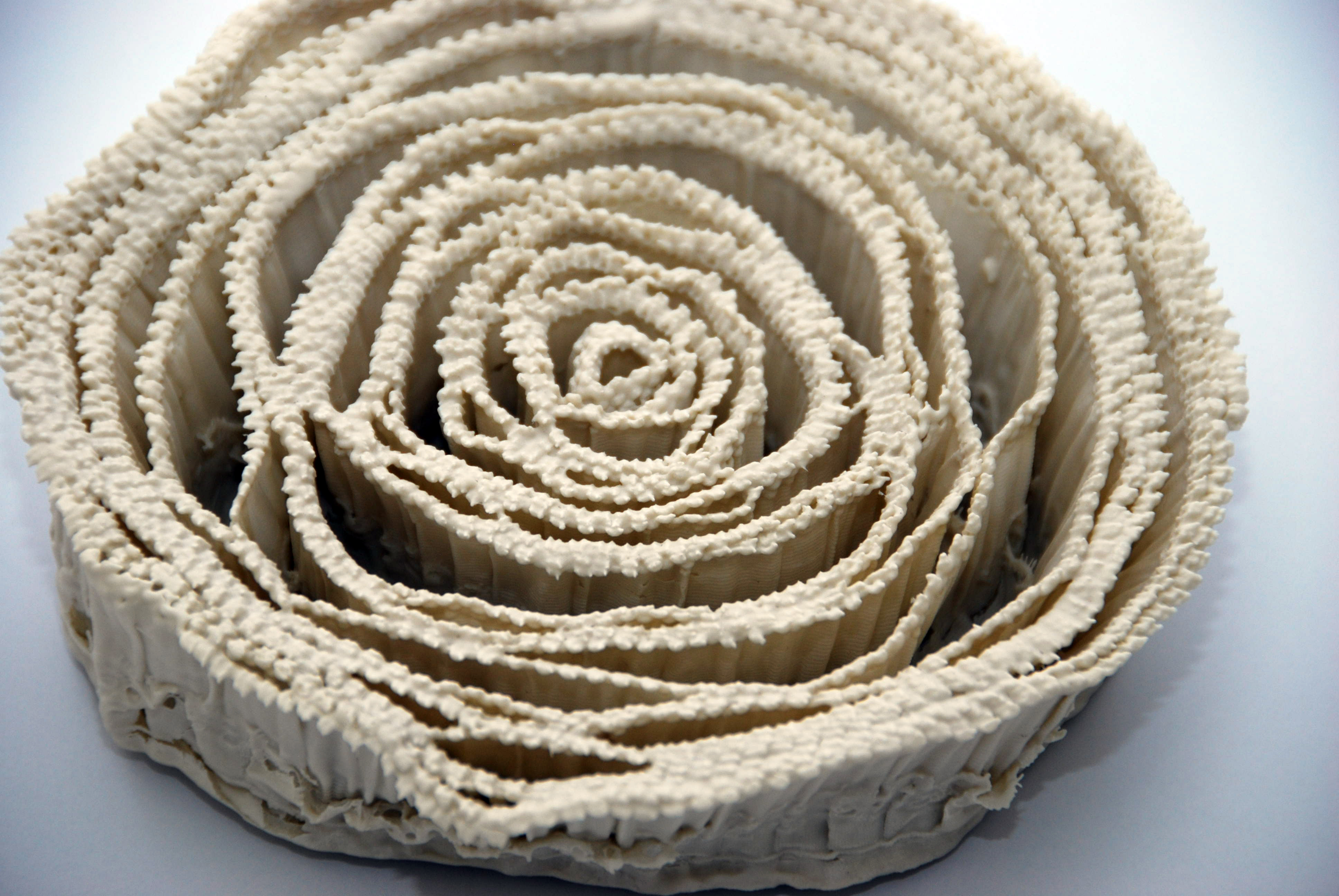
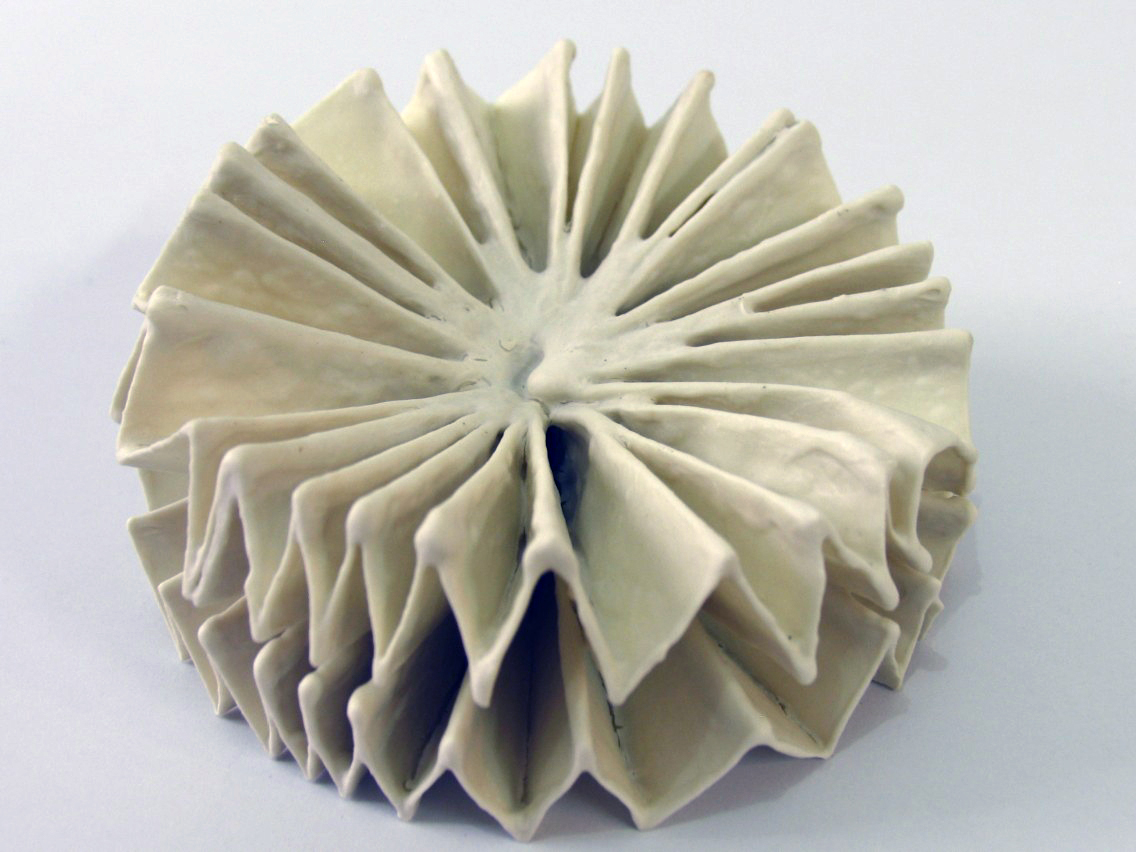
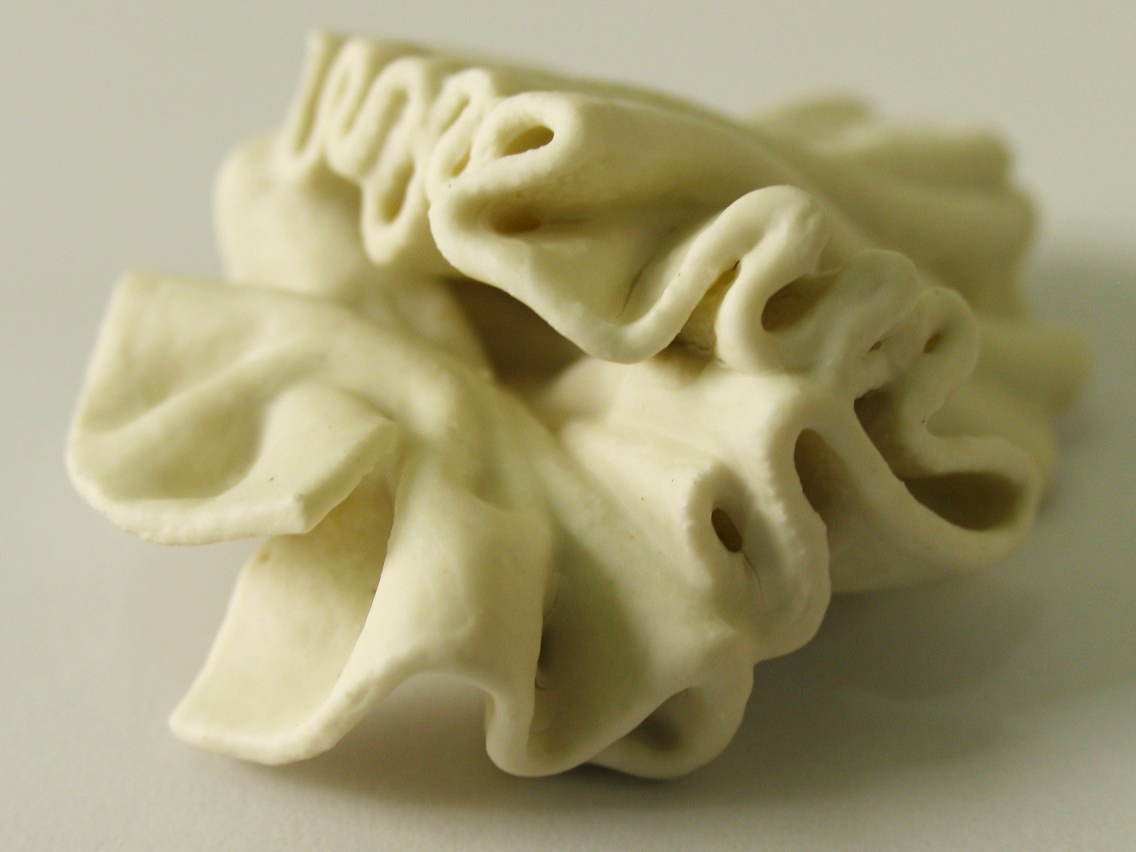
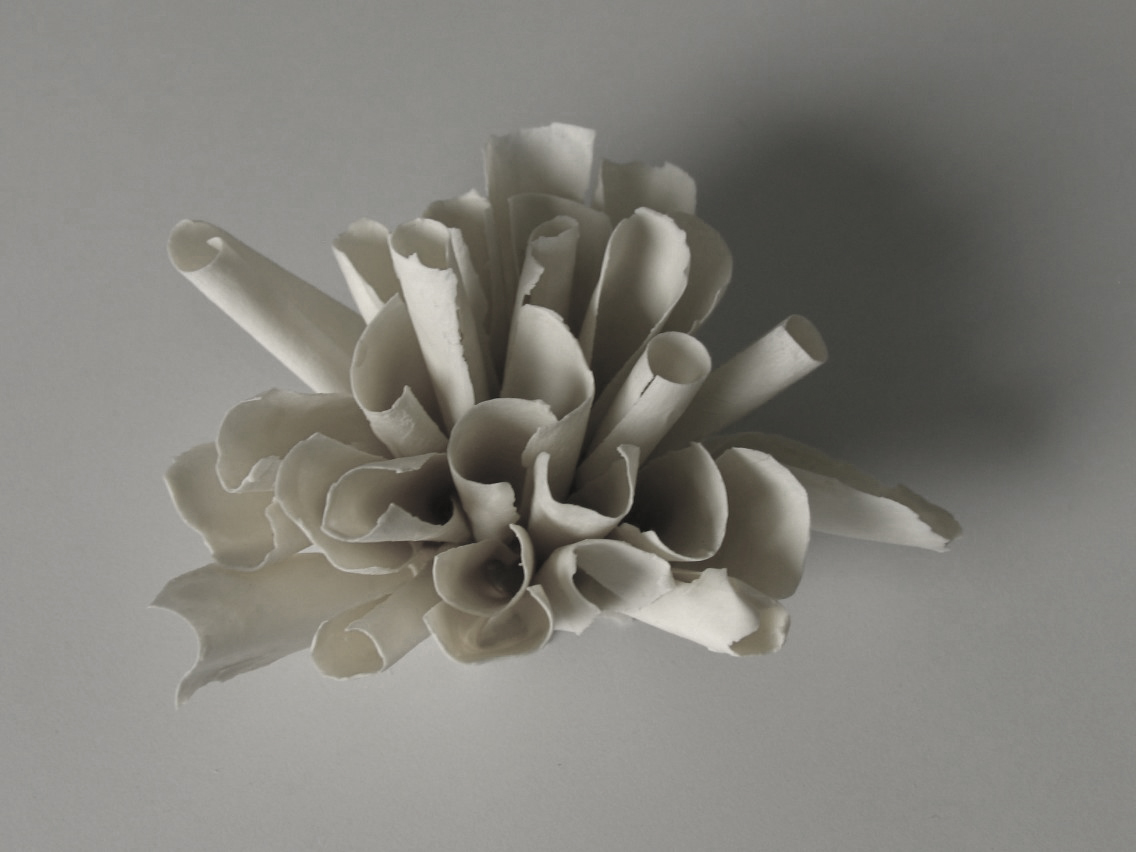
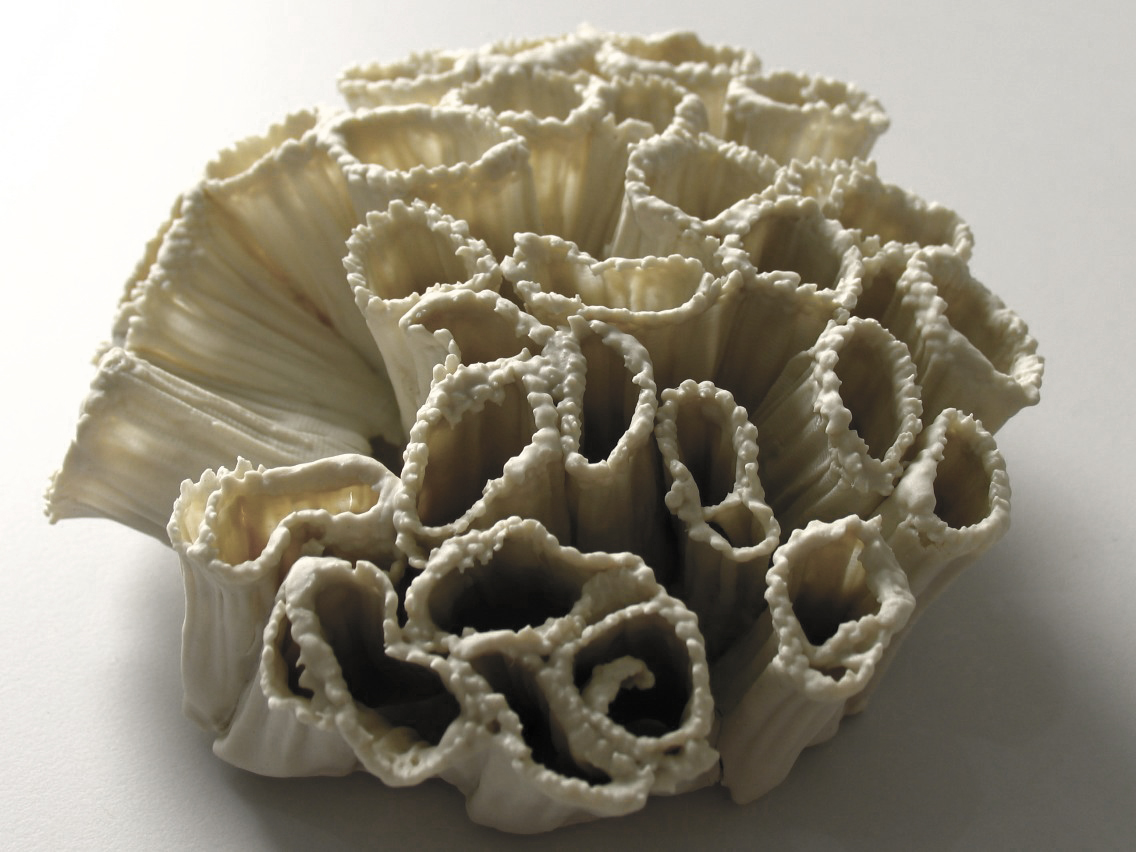
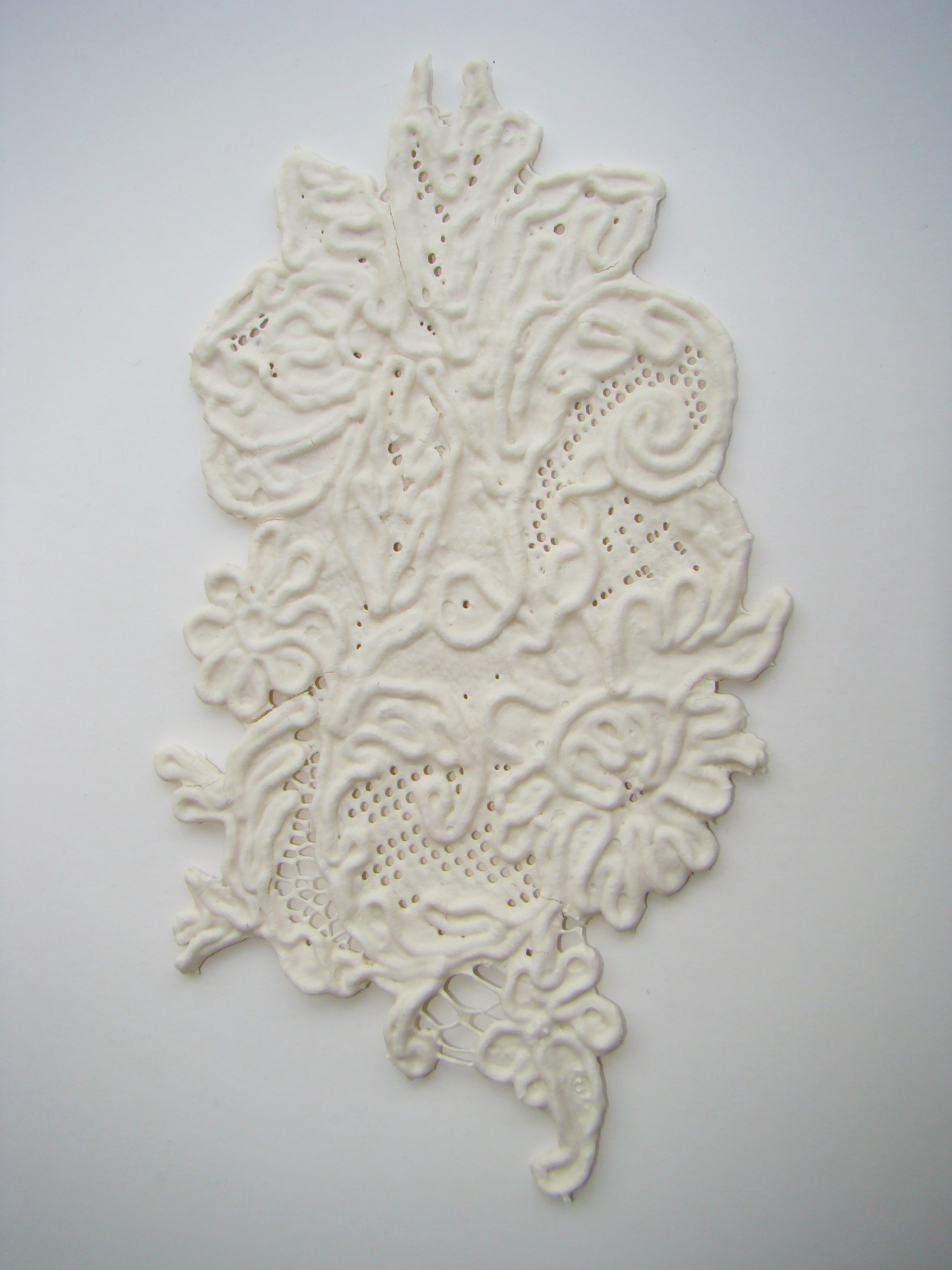
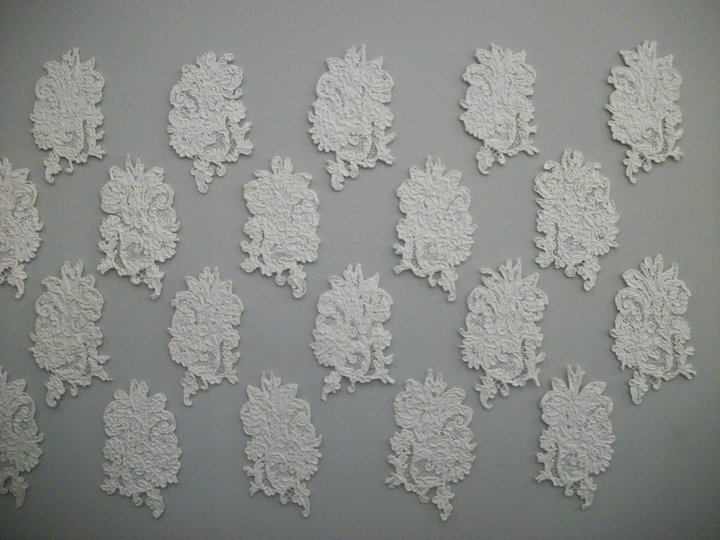
La materialización de la fragilidad y la belleza orgánica de lo coralino es uno de sus logros, que llega al extremo de la sutileza en la serie Embebidas, 2008-2011. Materiales como cordones de nylon, adornos de lencería femenina, encajes, telas cosidas, replegadas y sumergidas en arcilla, son recubiertos en nuevas pieles. Ciertas Embebidas(C, 2008) fueron inspiradas en el arte del origami y realizadas en telas, para evitar que el papel se desmaterializara al sumergirse en la arcilla. Cada una de estas piezas se caracteriza por un clima intimista al ser sometida al calor del horno. La estructura se incinera y ardiendo desde su interior para renacer de sus cenizas, como lo haría el ave Fénix, ave mitológica que inspiró uno de los poemas más significativos de H. D. Lawrence.

El Fénix esta asociado a la renovación, a las pequeñas muertes y renacerás que invaden la existencia, es la permanente incineración del ser, para nacer a nuevos horizontes. Son piezas mínimas que develan la fragilidad que las origina, asumen la monocroma para atrapar atmósferas coralinas, y sus estructuras tubulares o huecas semejan exoesqueletos de insectos.

“Deseo transmitir textura y movimiento. Desde hace ocho años trabajo ensartando módulos pequeños, inspirados en la flexibilidad y economía de materiales… Las obras se fueron desprendiendo de su vocación abstracta de alfombras arrugadas y empezaron a animarse.” (Isabel Cisneros, testimonio, 2010)

Urdimbre [in] material

 Willy Mckey, 2011

Urdimbre [in] material

“¡Larga vida a lo inmaterial!”
Yves Klein
0. [in] Materialidad. El lugar común de que todo hacer es una poética tiene su origen en la etimología clásica de la palabra griega poien, que puede traducirse como realizar o llevar a cabo.
Una noción de poiesis —la más usual— surge luego en el imaginario platónico, pues es en El Banquete donde se afirma que lo poético es aquello capaz de convertir cualquier cosa de no-ser a ser. Sin embargo, antes de adquirir esa filosófica estatura de “creación” —que en buena medida fue secuestrada por la literatura—, el término poiesis servía para denominar una idea mucho más cercana al resultado de un trabajo, como nuestras actuales y materiales ideas de “producción” u “obra”.
Moverse desde esa poiesis primaria —la de la obra, la que nos interesa— al grito de Yves Klein en 1958, vaciando la Galería Iris Clert y pintando de blanco sus paredes, requiere muchas más cuartillas que las posibles. Conducirnos luego a este conjunto de piezas de Isabel Cisneros no sería un trabajo ligero. Sin embargo, la noción de obra —es decir, de poiesis— se mantiene casi inalterada durante cualquier línea de fuga que se elija.
En aquella acción in-material de Klein, el artista francés tuvo a bien explicar que su propósito era mudarse de aquellos monocromos de la International Klein Blue al blanco, a la materia primaria, al espacio pleno. Para hacerlo utilizó nociones como “vacío”, “sensibilidad pictórica inmaterial” o “área de sensibilidad”. La referencia a Klein tiene la intención de poner la mirada en el vacío y por eso la evoco para leer estas piezas de Isabel Cisneros: por una duda expectante sobre si la poética de la artista reside en los espacios que su urdimbre ocupa con el material que elige y descubre para cada pieza, o más bien está en lo vaciado, en esa área de sensibilidad que deja pasar la luz o, incluso, en el espacio ‘contenido’ que cada una de estas esculturas utilitarias mantiene como una multiplicidad posible, precisamente por estar vacías.

1. Materialidad. Hablar de cualquier conjunto de piezas de Isabel Cisneros precisa detenerse pacientemente en el diálogo que existe entre los materiales que la ocupan y las técnicas que consigue para abordarlos. Cada decisión varía, pero las consecuencias de esto van mucho más allá de la simple —pero significativa— singularidad que determina a cada una de esas piezas. En vista de que el nexo que se genera entre todas las piezas no está determinado por el material ni por la técnica, los anclajes de la curaduría se afincan en regiones menos evidentes y, en esa medida, más orgánicos, cercanos, vivos.
Sin la amenaza de la pretensión que germina en el arte conceptual, la relación con las piezas de Cisneros se establece a partir de un reconocimiento en ellas de nosotros, sus espectadores, como parte de un sistema de intervención posible. Pero cuidado, porque esta intervención no está estrictamente relacionada con el abordaje físico de la pieza, sino que la misma comprensión —su lectura— se convierte en un acto intrusivo. Es parte del juego planteado por Cisneros que nos resulte complejo dar con el material utilizado, que atisbar con sus materias primas se convierta en un reto, que nuestra lectura insista en deshacer el proceso urdido por ella para hacer desaparecer el material original y mostrarnos sus potencias.
Lo tramado es un acertijo, una hermosa mampara que ha puesto en tensión el concepto del material y la técnica, con el objetivo de esconder tras ella la experiencia contradictoria de una pieza única que ha sido concebida a partir de un material producido en serie con fines industriales y una técnica basada en la repetición de puntos y tramas. Se trata de la singularidad conseguida a partir de lo repetido y de la repetición, con la difícil anulación de lo repetible.
Es así como nuestra mirada nos convierte en intrusos dentro del proceso que logremos imaginar, sin la necesidad de que éste coincida con el ejecutado por la artista. Nos sorprendemos adivinando, conjeturando, desterritorializando la pieza hasta poder llegar a su germen. Es el triunfo del gesto artesano frente a la máquina, a la que además logra convertir en su cómplice. Por eso son parte fundamental de las piezas de esta muestra sus vacíos, su sensibilidad escultórica inmaterial, sus áreas de sensibilidad posibles, sea que pertenezcan a la tangibilidad de los materiales o al ejercicio de la técnica.

2. [trans] Materialidad. Una de las marcas de las piezas del francés Klein es que todas intentaron hacer congeniar la experiencia de lo-sentido con lo-comprendido. La pretensión no es original de Klein: la filosofía Zen y todas las artes derivadas de ella han intentado lo mismo durante siglos. El asunto en Cisneros es que la imposible aparición de lo Zen es un tropiezo ante la fascinación por lo industrial, el encanto de lo sintético y la persuasión de lo menudo y doméstico —el cable, la elástica, el botón—, que ha ido minando una obra cuyo fundamento está en la arcilla y los rigores del horno y el torno.
Es la transformación lo que seduce en las piezas de Cisneros. Como si asistiéramos dos segundos tarde a un truco de prestidigitación, sus dedos han transformado algo en una escultura fascinante, capaz de dejar pasar la luz o —incluso— de . Así la técnica insiste en que los materiales pueden desaparecer. Pero no se desmaterializan: en lugar de esa disolvencia, Cisneros hace que se in-materialicen gracias a la capacidad de la artista para adivinar sus potencias y urdirles regiones singulares, sencillas, cercanas, y con eso honestas.
Es lo que Cisneros logra hacer. Su fascinante poiesis.

Warp [in] Material

“Long live the immaterial!”
Yves Klein
0. [in] Materiality. The common place that all making is a poetics has its origin in the classical Greek etymology poien, which can be translated as make or carry out.
A notion of poiesis – the usual – comes after the imaginary Platonic, it is in the Symposium which states that the poetic is something capable of converting anything from non-being to being. However, before purchasing this philosophical stature of ”creation”, which was largely hijacked by the literature, the term was used to describe poiesis an idea much closer to the result of a work, as our current ideas and materials ”production” or ”work“.
Moving from the primary poiesis -of the work, in which we are interested in- into the cry of Yves Klein in 1958, emptying the Clert Iris Gallery and painting your walls white, requires many more pages that is possible to write. Then, lead to this set of pieces by Isabel Cisneros would not be a light work. However, the notion of work –poiesis- remains almost unchanged for any drain line that is chosen.
In that action in- material Klein, the French artist was kind enough to explain that its purpose was to move from that monochrome from the International Klein Blue to white, the primary matter, the full space. To do that he used notions as ”emptiness”, ”immaterial pictorial sensibility” or ”sensitive area”. The reference to Klein intends to put the look in a vacuum and that’s why I recall reading these pieces of Isabel Cisneros: waiting for a question on whether the poetics of the artist lies in his warp spaces occupied with material choose and discover for each piece, or rather it is empty, in that sensitive area that allows light or even in space ‘ content ‘ that each of these sculptures utilitarian remains a possible multiplicity, precisely because been empty.
1. Materiality. Talk about any set of pieces by Isabel Cisneros requires to stop patiently precise dialogue between the concerned materials and techniques that get to address them. Every decision varies, but the implications of this go far beyond the simple – but significant – uniqueness that determines each of these pieces. Since the bond that develops between all parts is determined neither by the material nor by the technique, curating anchors all build on regions less obvious and, to that extent, more organic, nearby living.
Without the threat of the claim that germinates in conceptual art, the relationship with Cisneros parts set from a recognition in them of us, his viewers, as part of a possible intervention. But beware; because this intervention is not strictly related to the physical approach of the piece, but the same understanding becomes an intrusive act. Part of the game proposed by Cisneros is to make us difficult to find what material was used, to challenge us to look at the raw materials, that our reading insist to undo the warping process, remove the original material and show their many possibilities.
The threaded is a riddle, a beautiful screen that has been switched on the concept of material and technique, with the aim of hiding behind her contradictory experience a unique piece that is designed from a material produced in series to end industrial and a technique based on the repetition of points and frames. Uniqueness is obtained from the repeated and repeated, with the cancellation of the repeatable difficult.
This is how our eyes make us outsiders in the process we achieve imagine, without the need for it to match with the one executed by the artist. We are surprised guessing, conjecturing, until we’re able to reach its germ. Gesture is the triumph of craftsman front of the machine, which also manages to turn his accomplice. So are a fundamental part of the pieces in this show its emptiness, immaterial sculptural sensitivity, areas of potential sensitivity, whether they belong to the tangibility of the materials or use of the technique.
2. [trans] Materiality. One brand of French pieces Klein is that all tried to get on the experience of the feel with the comprehended. The original claim is not from Klein: Zen philosophy and the arts all derived from it have tried the same for centuries. The matter in Cisneros is that the impossible appearance of what Zen is a stumbling block before the fascination with industrial, the charm of the synthetic and the persuasion on the small and domestic – electric cord, elastic ribbon, button – which has undermined a work whose foundation is in the clay and the accuracies of the potters´ wheel and kilns.
Transformation is what seduces in Cisneros works. As if we were witnessing two seconds later to a sleight of hand, your fingers have become something into a fascinating sculpture, capable of passing light or – even – in. Then, technique claim that materials may disappear. But not dematerializing: instead of the fade, Cisneros makes it in- materialize thanks to the ability of the artist to guess his powers and thread singular places, simple, close, and honest.
Is what Cisneros manages to do. Its fascinating poiesis.

Twisting, Rolling and Wrinkling

The Journal of Australian Ceramics, #48, Sydney, April 2009

Torciendo, enrollando, arrugando

Por Monika Leone

Isabel Cisneros es una ceramista venezolana que ha sido invitada a Canberra para exponer individualmente. “Flexible Sculptures” (Esculturas flexibles) inauguró el 27 de noviembre del 2008 en la Galería Mawson, y permaneció abierta al público hasta el 12 de diciembre.
Esta versátil artista se ha formado principalmente en Caracas, Venezuela, y ha estado involucrada muy profundamente en el movimiento artístico de su país. Se ha presentado individual y colectivamente en Venezuela, México, Puerto Rico, Colombia, España, Corea y Perú, y ha participado en diferentes concursos nacionales e internacionales habiendo recibido importantes reconocimientos.
La obra cerámica de Cisneros es bastante original si tomamos en cuenta el uso formal o tradicional de este materia. Luego de más de diez años de trabajo en el campo de la ceramita utilitaria, centró su interés en la cerámica escultórica, otorgando nuevas cualidades que no son propias a este material.
Como ella misma ha dicho, se encontró limitada por la opacidad de la arcilla, y comenzó a elaborar pequeñas rejillas para permitir que la luz se colara por los pequeños orificios. Estas rejillas eran muy frágiles y pequeñas, y la llevó a cuestionarse cómo hacer piezas en un mayor formato. Los huecos en las rejillas le sugirieron una idea que también la ayudó a resolver otra limitante de la arcilla: la rigidez
Estas experiencias la llevaron a comenzar a entretejer estas pequeñas piezas entre sí con guayas de acero inoxidable o nylon, y elaborar una especie de alfombras que pueden ser enrolladas o torcidas de múltiples maneras para obtener un formato escultórico variable, permitiendo al espectador maniobrarlas para tener una idea más real acerca de su flexibilidad y versatilidad y así crear diferentes formas.
Con la intención de “crear lo más posible con los mínimos recursos posibles”, Isabel elabora miles de piezas similares en arcilla sin esmaltar, obteniendo una resolución final textil.
Gracias a su inquietud, su trabajo oscila entre el uso de la arcilla y el ensamblaje, logrando piezas más conceptuales. Su trabajo ha estado en un constante proceso de evolución movido tanto por su curiosidad como por su necesidad de experimentación.
Objetos encontrados de la vida cotidiana y en la naturaleza han ampliado el espectro de estas esculturas flexibles in las han influenciado en textura y movimiento.
Trinaquia, una obra compuesta por tres piezas, está elaborada mediante el tejido de afiladas agujas de cerámica, creando un aspecto rígido, frágil y espinoso. El público quedó asombrado al ver cuán elasticas y versatiles eran estas piezas, contrariamente a su apariencia.
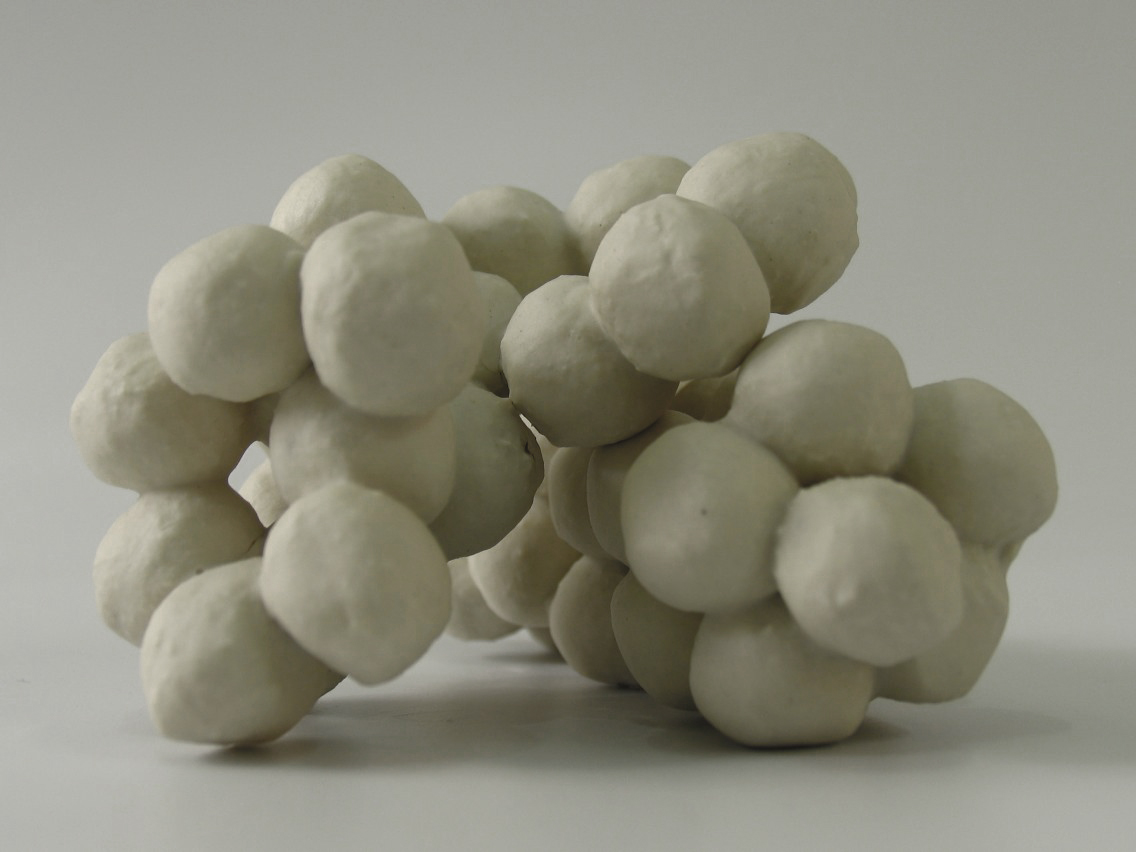
Erizos, Lavacarros y Nudos son también acumulaciones de pequeñas piezas tejidas de módulos cerámicos. La interactividad de estas obras se duplicaba, tanto por la manera en que las piezas pueden ser movidas como por la manera en que se van acoplando unas sobre otras.
La sensibilidad de esta artista venezolana de combinar elementos naturales y artificiales resulta en un divertido sin fin de posibilidades, es así que ella llego a Canberra en noviembre con once obras, siete de ellas de cerámica y cuatro de diversos materiales.
Valiéndose de módulos similares hechos de dos materiales (arcilla y plástico), y ensamblándolos con esquemas de tejidos diferentes, Cuaima y Citrus son ejemplos claros de cómo Cisneros explora con contrastantes niveles de elasticidad y textura.
La obra de Isabel Cisneros está muy relacionada con el proceso textil, y por ello incluyó en su muestra tres obras cosidas y tejidas. Una de ellas, Desde Venezuela a Australia vía China, es una pieza en crecimiento. Comenzó en su país y la fue tejiendo durante su largo trayecto a Australia. Fue exhibida con la aguja de crochet y el hilo de nylon restante, como una metáfora de esta experiencia en Australia y puede ser vista como un nuevo punto de partida en el desarrollo de su trabajo.

Twisting, Rolling and Wrinkling

Isabel Cisneros is a Venezuelan ceramist who present a solo exhibition in Canberra. “Flexible Sculptures” opened on November 27th, 2008 at the Mawson Gallery and was open to the public until December 12th.
This versatile artist was mainly trained in Caracas, Venezuela and has been deeply involved in the artistic movement in her country. She has presented group and solo exhibitions in Venezuela, Mexico, Puerto Rico, Colombia, Spain, Korea and Peru, and has participated in several competitions locally and abroad with an outstanding outcome.
Cisneros’ ceramic work is quite original from the formal or traditional use of the material.
After more than 10 years making functional ware in a traditional way, she focused her interest in sculptural ceramic, giving new qualities to the clay that are not inherent to this media.
As Isabel has said, she found herself limited by the opaqueness of the clay, and started to make grids to allow the light to come inside the pieces of clay. These grids were too delicate and very small, and made her think about making sculptures in larger formats. The holes in the grids suggested an idea which helped to solve another limitation with clay: rigidness.
These experiences made her realise she could start threading these small pieces together with stainless steel and nylon, to make flat rugs that can be twisted, rolled, and wrinkled in infinite ways, to become three-dimensional and variable sculptures. They can be arranged in different formats, thus allowing the viewers to manoeuvre in order to get a precise idea of its flexibility and versatility and interpret the compositions.
With the purpose of “creating the most with the least possible resources” she makes almost identical modules in unglazed clay, which are threaded to form a woven piece of art.
Because of her restless and eager enthusiasm, she later moved towards using clay and mixed media to make more conceptual sculptural pieces. Her work has been in constant process of evolution due to her curiosity and need for experimentation.
Found elements in everyday life and in nature have contributed to the creation of her flexible sculptures and is greatly influenced by their texture and movement.
Trinaquia, a set of three pieces, is and art work threaded with sharp ceramic needles which create a rigid, fragile ad spiky feeling. The audience were surprised to see how truly elastic and versatile these three pieces were in spite of their appearance.
Urchins, Car Washers and Knots are also accumulations or groups of similar threaded pieces. The interactivity of the work duplicates, both by the way the pieces themselves can be turned and by the way the spectator overlaps them.
This Venezuelan artist’s sensitivity to combine natural and artificial elements results in amazing and endless possibilities, so she came last November to Canberra with eleven works, seven made out of clay and four with other materials.
By using similar modules made out of different materials (clay and plastic), and threading them in opposite ways, Cuaima and Citrus are clear examples of how Cisneros explores contrasting levels of elasticity and texture in her work.
Isabel Cisneros’ work is very interrelated with textiles, and included in her exhibition three sawn and crocheted art works. One of them, named From Venezuela to Australia via China is a growing piece. She started working on it in her hometown and developed it in her journey to Australia. She exhibited it along with the crocheting hook and the remaining thread, as a metaphor of how this experience in Australia made a strong imprint in her work and can be seen as a starting point of a new stage in her professional development.

Embebidas

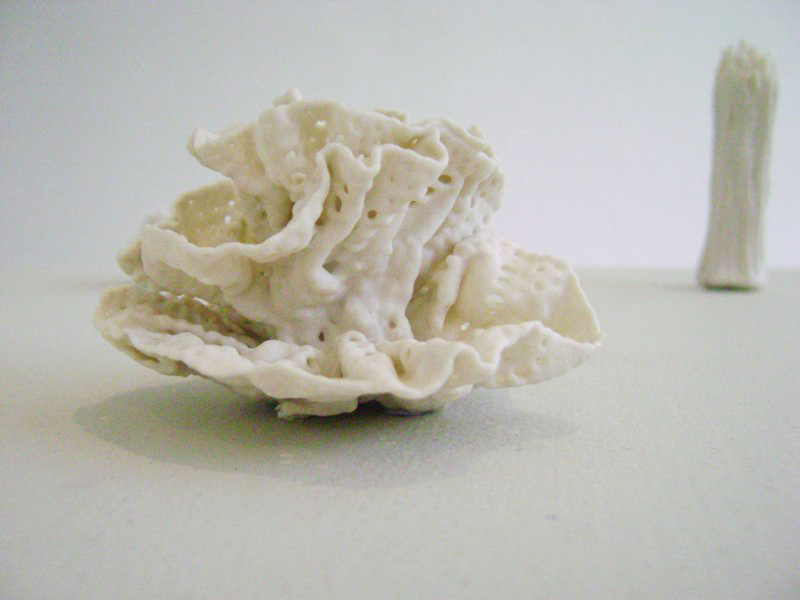
Haciendo uso de la técnica del papel cerámico, y jugando con la idea de la cerámica textil, tomé piezas y materiales propios de la costura y los fui cosiendo y tejiendo. Luego fueron bañados por porcelana fluida, que al ser quemada se convirtió en un exoesqueleto de esas formas, logrando traslucidez y liviandad.

This was made using ceramic paper technique and diving into the idea of textile clay. I took pieces and materials from seam, then sewed and knotted them. Afterwards, they were coated with fluid porcelain. When burnt, the porcelain became an exoskeleton of these shapes, achieving translucency and lightness.