Twisting, Rolling and Wrinkling

The Journal of Australian Ceramics, #48, Sydney, April 2009

Torciendo, enrollando, arrugando

Por Monika Leone

Isabel Cisneros es una ceramista venezolana que ha sido invitada a Canberra para exponer individualmente. “Flexible Sculptures” (Esculturas flexibles) inauguró el 27 de noviembre del 2008 en la Galería Mawson, y permaneció abierta al público hasta el 12 de diciembre.
Esta versátil artista se ha formado principalmente en Caracas, Venezuela, y ha estado involucrada muy profundamente en el movimiento artístico de su país. Se ha presentado individual y colectivamente en Venezuela, México, Puerto Rico, Colombia, España, Corea y Perú, y ha participado en diferentes concursos nacionales e internacionales habiendo recibido importantes reconocimientos.
La obra cerámica de Cisneros es bastante original si tomamos en cuenta el uso formal o tradicional de este materia. Luego de más de diez años de trabajo en el campo de la ceramita utilitaria, centró su interés en la cerámica escultórica, otorgando nuevas cualidades que no son propias a este material.
Como ella misma ha dicho, se encontró limitada por la opacidad de la arcilla, y comenzó a elaborar pequeñas rejillas para permitir que la luz se colara por los pequeños orificios. Estas rejillas eran muy frágiles y pequeñas, y la llevó a cuestionarse cómo hacer piezas en un mayor formato. Los huecos en las rejillas le sugirieron una idea que también la ayudó a resolver otra limitante de la arcilla: la rigidez
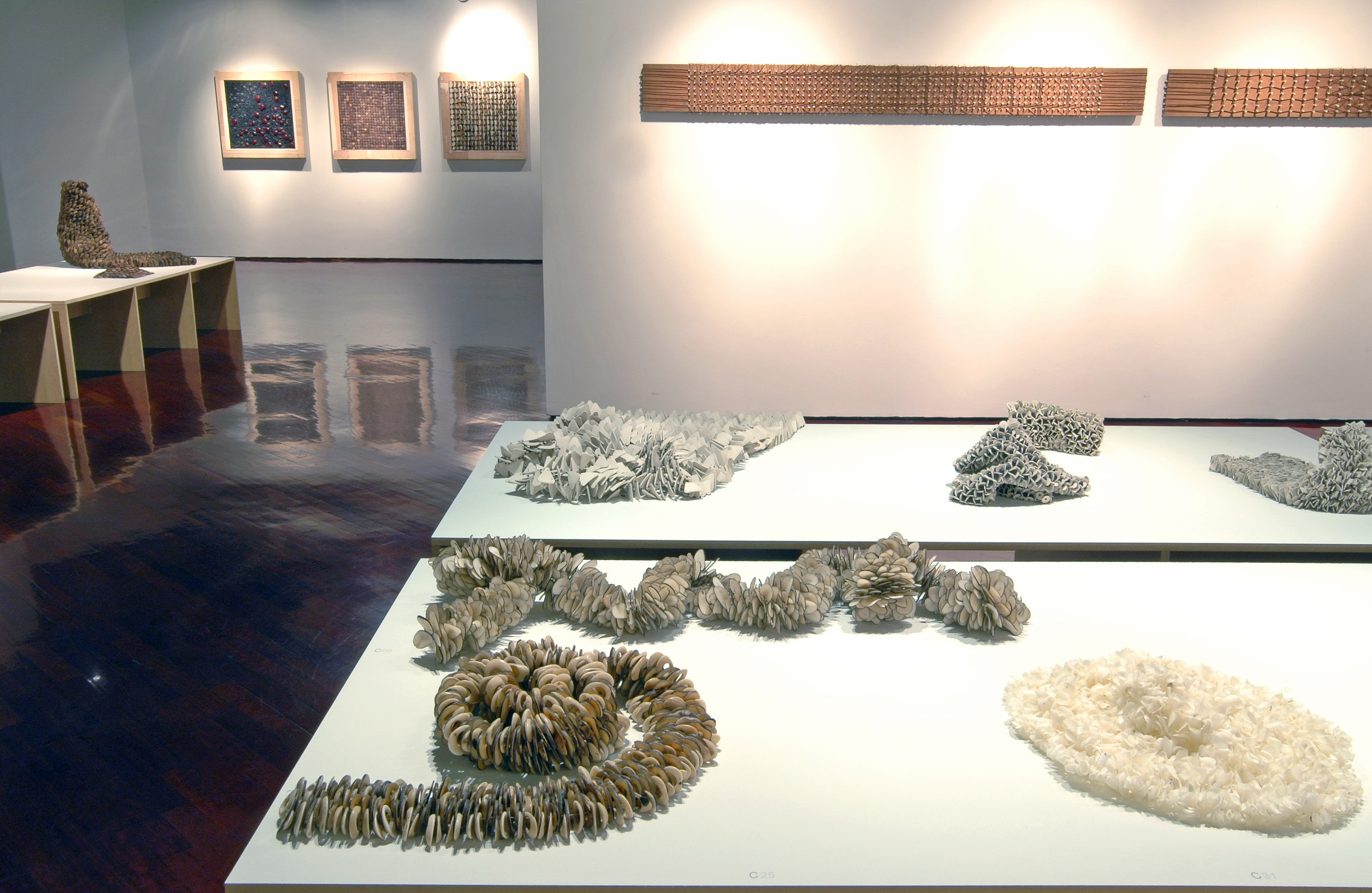
Estas experiencias la llevaron a comenzar a entretejer estas pequeñas piezas entre sí con guayas de acero inoxidable o nylon, y elaborar una especie de alfombras que pueden ser enrolladas o torcidas de múltiples maneras para obtener un formato escultórico variable, permitiendo al espectador maniobrarlas para tener una idea más real acerca de su flexibilidad y versatilidad y así crear diferentes formas.
Con la intención de “crear lo más posible con los mínimos recursos posibles”, Isabel elabora miles de piezas similares en arcilla sin esmaltar, obteniendo una resolución final textil.
Gracias a su inquietud, su trabajo oscila entre el uso de la arcilla y el ensamblaje, logrando piezas más conceptuales. Su trabajo ha estado en un constante proceso de evolución movido tanto por su curiosidad como por su necesidad de experimentación.
Objetos encontrados de la vida cotidiana y en la naturaleza han ampliado el espectro de estas esculturas flexibles in las han influenciado en textura y movimiento.
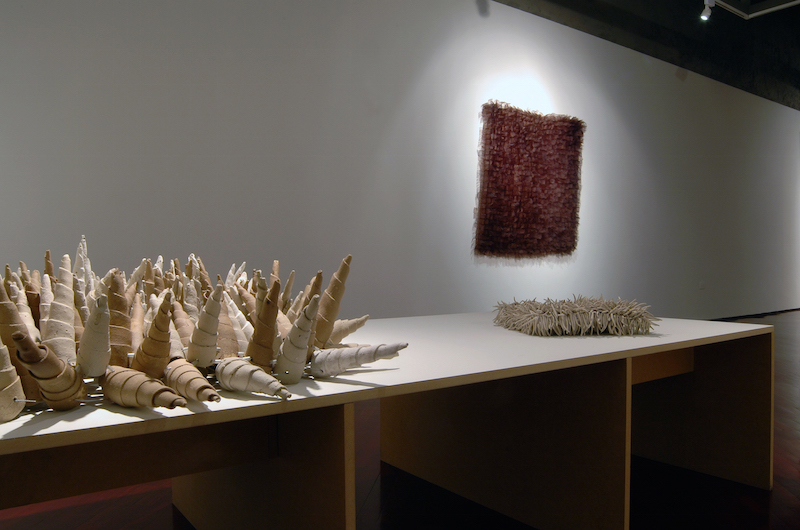
Trinaquia, una obra compuesta por tres piezas, está elaborada mediante el tejido de afiladas agujas de cerámica, creando un aspecto rígido, frágil y espinoso. El público quedó asombrado al ver cuán elasticas y versatiles eran estas piezas, contrariamente a su apariencia.
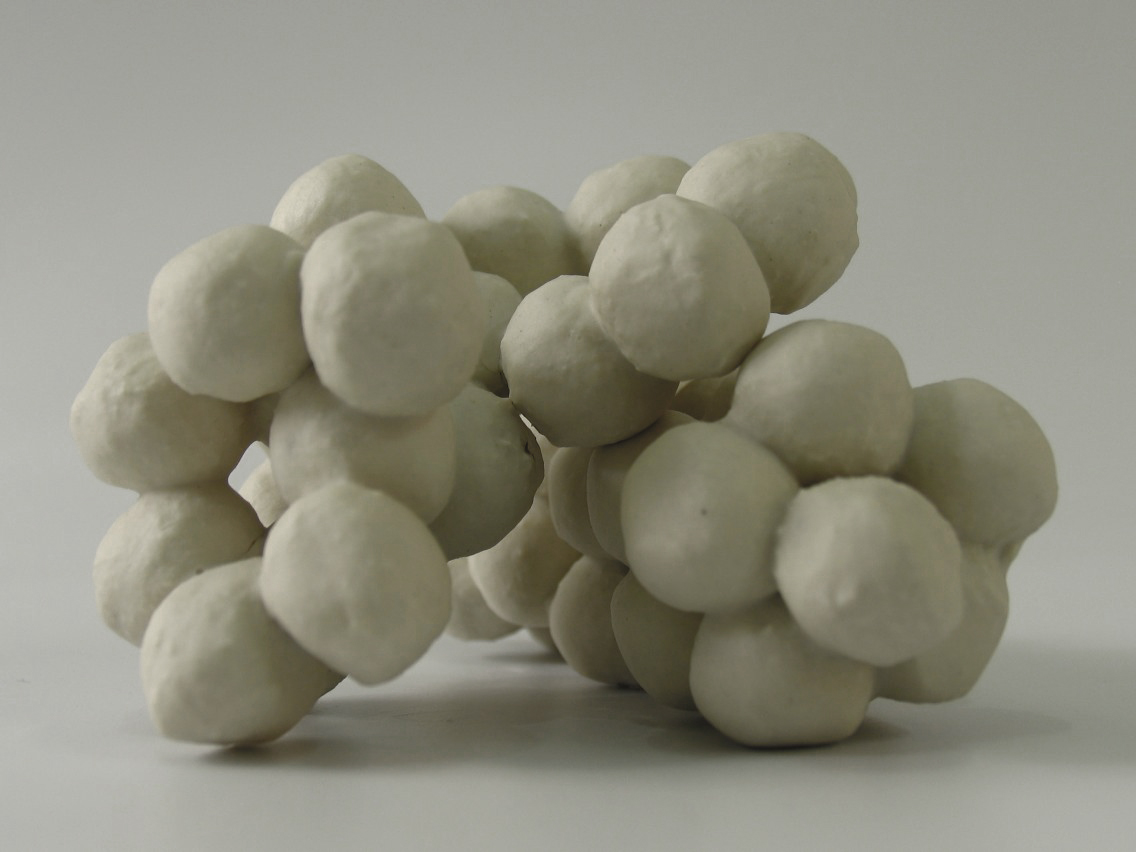
Erizos, Lavacarros y Nudos son también acumulaciones de pequeñas piezas tejidas de módulos cerámicos. La interactividad de estas obras se duplicaba, tanto por la manera en que las piezas pueden ser movidas como por la manera en que se van acoplando unas sobre otras.
La sensibilidad de esta artista venezolana de combinar elementos naturales y artificiales resulta en un divertido sin fin de posibilidades, es así que ella llego a Canberra en noviembre con once obras, siete de ellas de cerámica y cuatro de diversos materiales.
Valiéndose de módulos similares hechos de dos materiales (arcilla y plástico), y ensamblándolos con esquemas de tejidos diferentes, Cuaima y Citrus son ejemplos claros de cómo Cisneros explora con contrastantes niveles de elasticidad y textura.
La obra de Isabel Cisneros está muy relacionada con el proceso textil, y por ello incluyó en su muestra tres obras cosidas y tejidas. Una de ellas, Desde Venezuela a Australia vía China, es una pieza en crecimiento. Comenzó en su país y la fue tejiendo durante su largo trayecto a Australia. Fue exhibida con la aguja de crochet y el hilo de nylon restante, como una metáfora de esta experiencia en Australia y puede ser vista como un nuevo punto de partida en el desarrollo de su trabajo.

Twisting, Rolling and Wrinkling

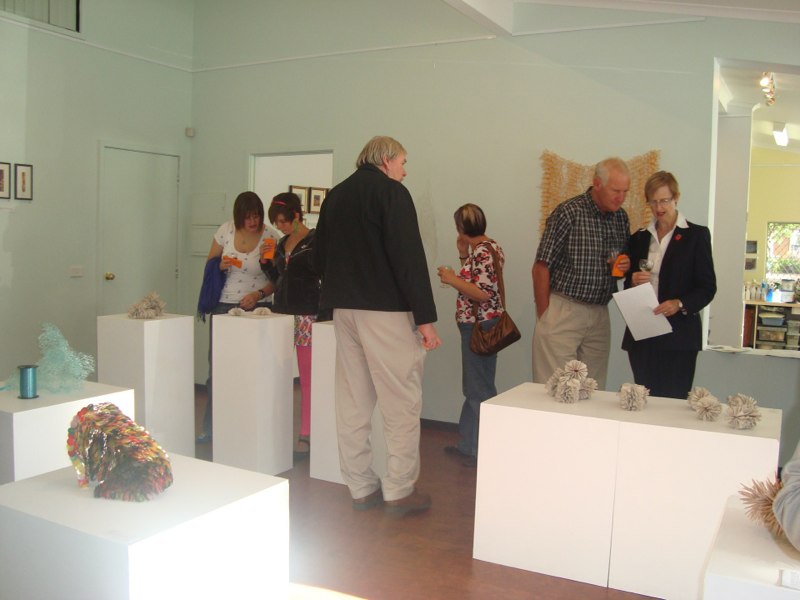
Isabel Cisneros is a Venezuelan ceramist who present a solo exhibition in Canberra. “Flexible Sculptures” opened on November 27th, 2008 at the Mawson Gallery and was open to the public until December 12th.
This versatile artist was mainly trained in Caracas, Venezuela and has been deeply involved in the artistic movement in her country. She has presented group and solo exhibitions in Venezuela, Mexico, Puerto Rico, Colombia, Spain, Korea and Peru, and has participated in several competitions locally and abroad with an outstanding outcome.
Cisneros’ ceramic work is quite original from the formal or traditional use of the material.
After more than 10 years making functional ware in a traditional way, she focused her interest in sculptural ceramic, giving new qualities to the clay that are not inherent to this media.
As Isabel has said, she found herself limited by the opaqueness of the clay, and started to make grids to allow the light to come inside the pieces of clay. These grids were too delicate and very small, and made her think about making sculptures in larger formats. The holes in the grids suggested an idea which helped to solve another limitation with clay: rigidness.
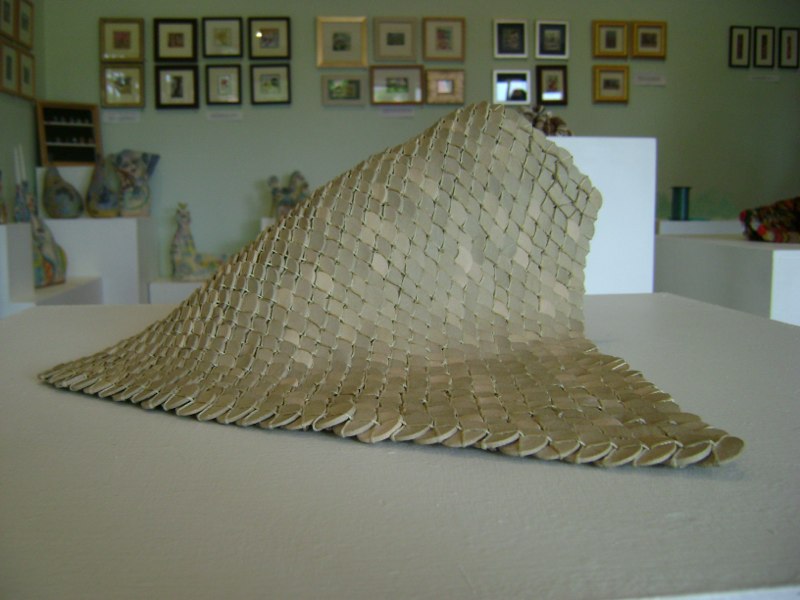
These experiences made her realise she could start threading these small pieces together with stainless steel and nylon, to make flat rugs that can be twisted, rolled, and wrinkled in infinite ways, to become three-dimensional and variable sculptures. They can be arranged in different formats, thus allowing the viewers to manoeuvre in order to get a precise idea of its flexibility and versatility and interpret the compositions.
With the purpose of “creating the most with the least possible resources” she makes almost identical modules in unglazed clay, which are threaded to form a woven piece of art.
Because of her restless and eager enthusiasm, she later moved towards using clay and mixed media to make more conceptual sculptural pieces. Her work has been in constant process of evolution due to her curiosity and need for experimentation.
Found elements in everyday life and in nature have contributed to the creation of her flexible sculptures and is greatly influenced by their texture and movement.
Trinaquia, a set of three pieces, is and art work threaded with sharp ceramic needles which create a rigid, fragile ad spiky feeling. The audience were surprised to see how truly elastic and versatile these three pieces were in spite of their appearance.
Urchins, Car Washers and Knots are also accumulations or groups of similar threaded pieces. The interactivity of the work duplicates, both by the way the pieces themselves can be turned and by the way the spectator overlaps them.
This Venezuelan artist’s sensitivity to combine natural and artificial elements results in amazing and endless possibilities, so she came last November to Canberra with eleven works, seven made out of clay and four with other materials.
By using similar modules made out of different materials (clay and plastic), and threading them in opposite ways, Cuaima and Citrus are clear examples of how Cisneros explores contrasting levels of elasticity and texture in her work.
Isabel Cisneros’ work is very interrelated with textiles, and included in her exhibition three sawn and crocheted art works. One of them, named From Venezuela to Australia via China is a growing piece. She started working on it in her hometown and developed it in her journey to Australia. She exhibited it along with the crocheting hook and the remaining thread, as a metaphor of how this experience in Australia made a strong imprint in her work and can be seen as a starting point of a new stage in her professional development.

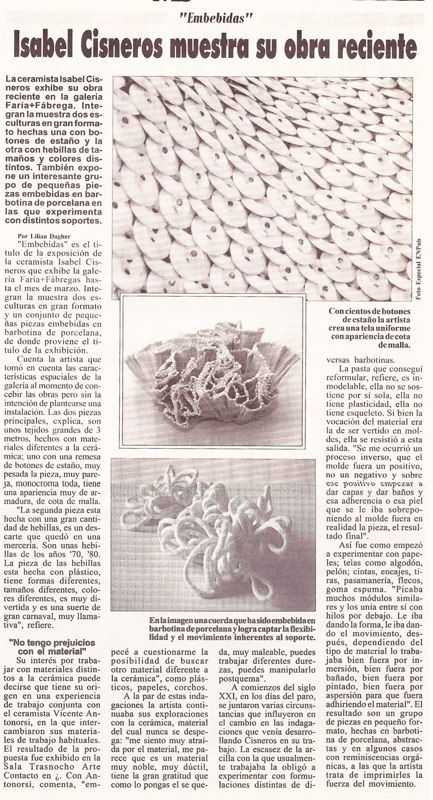
Embebidas

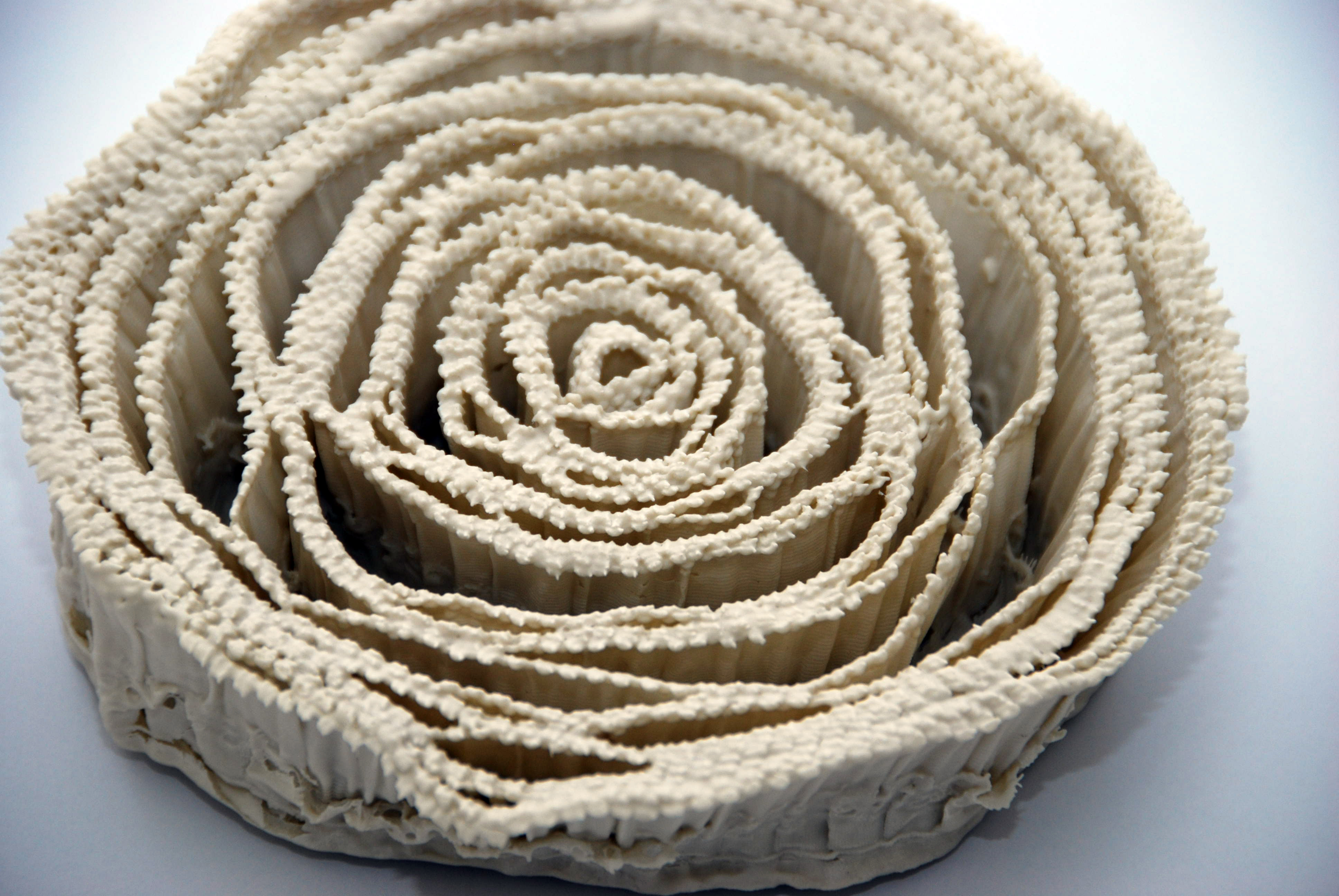
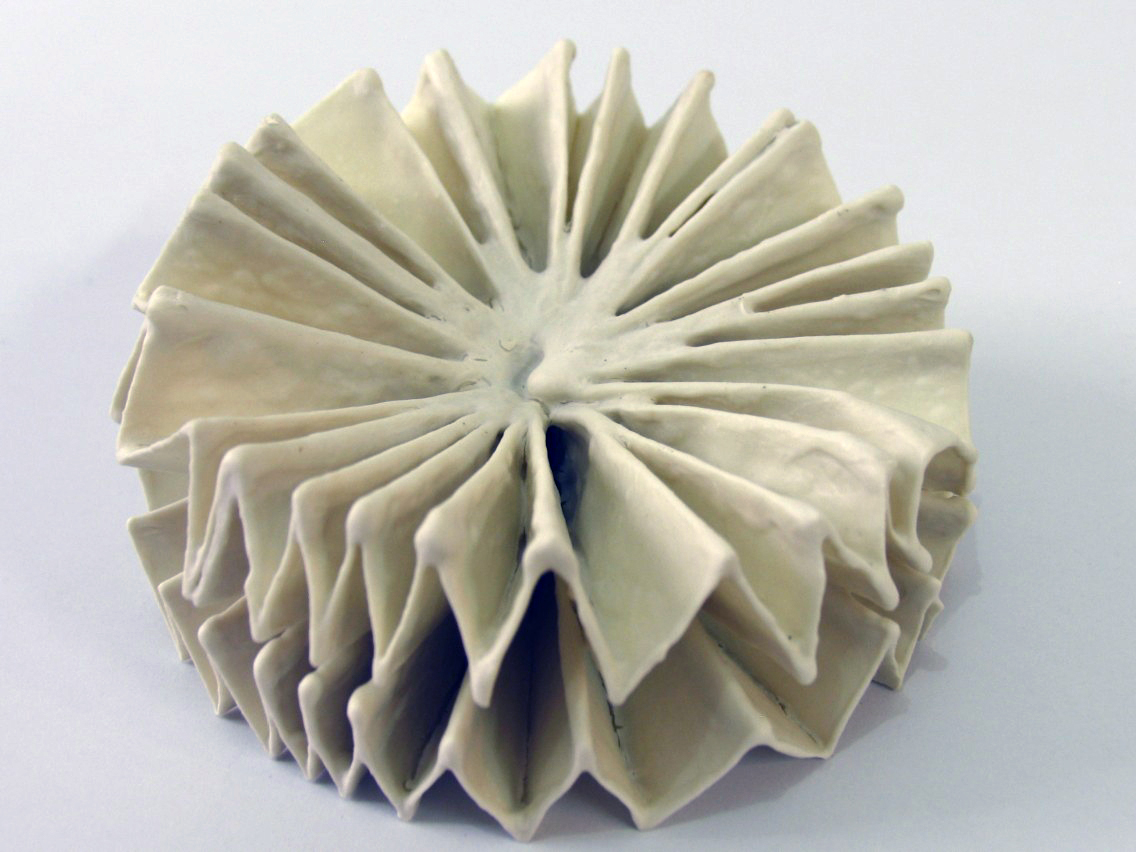
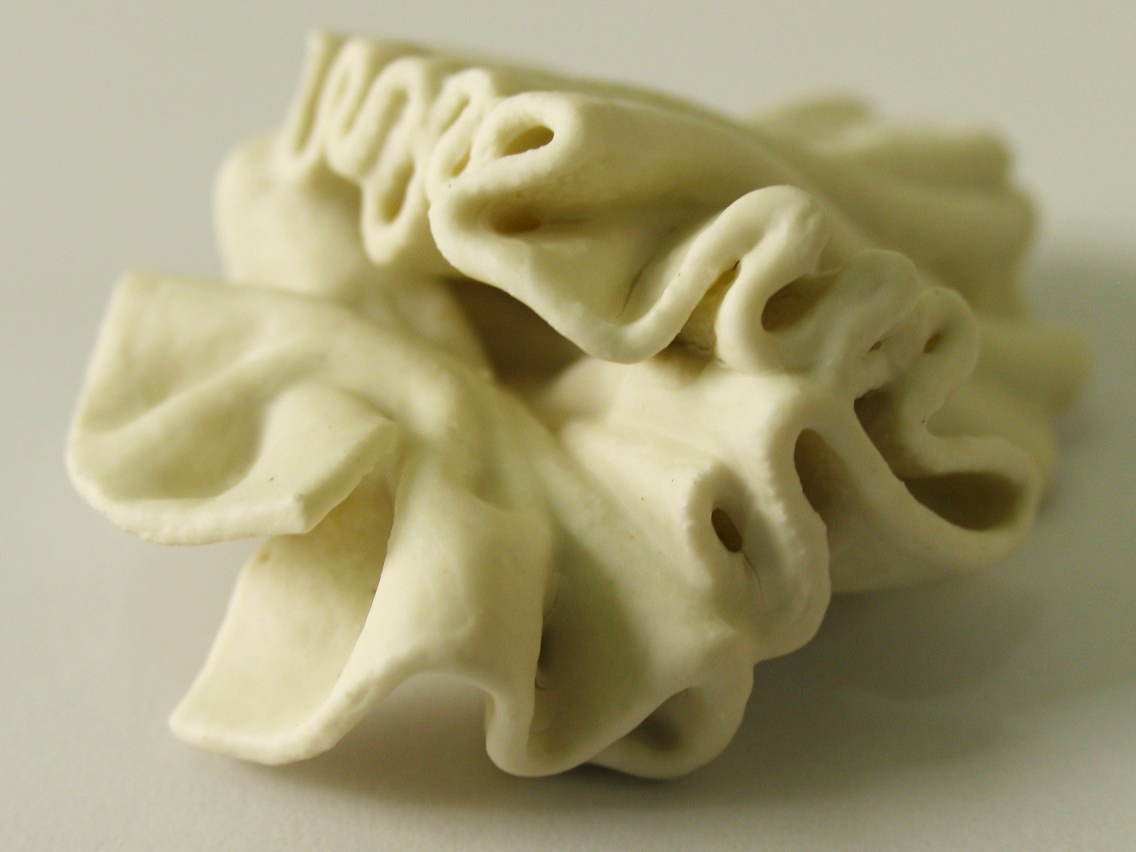
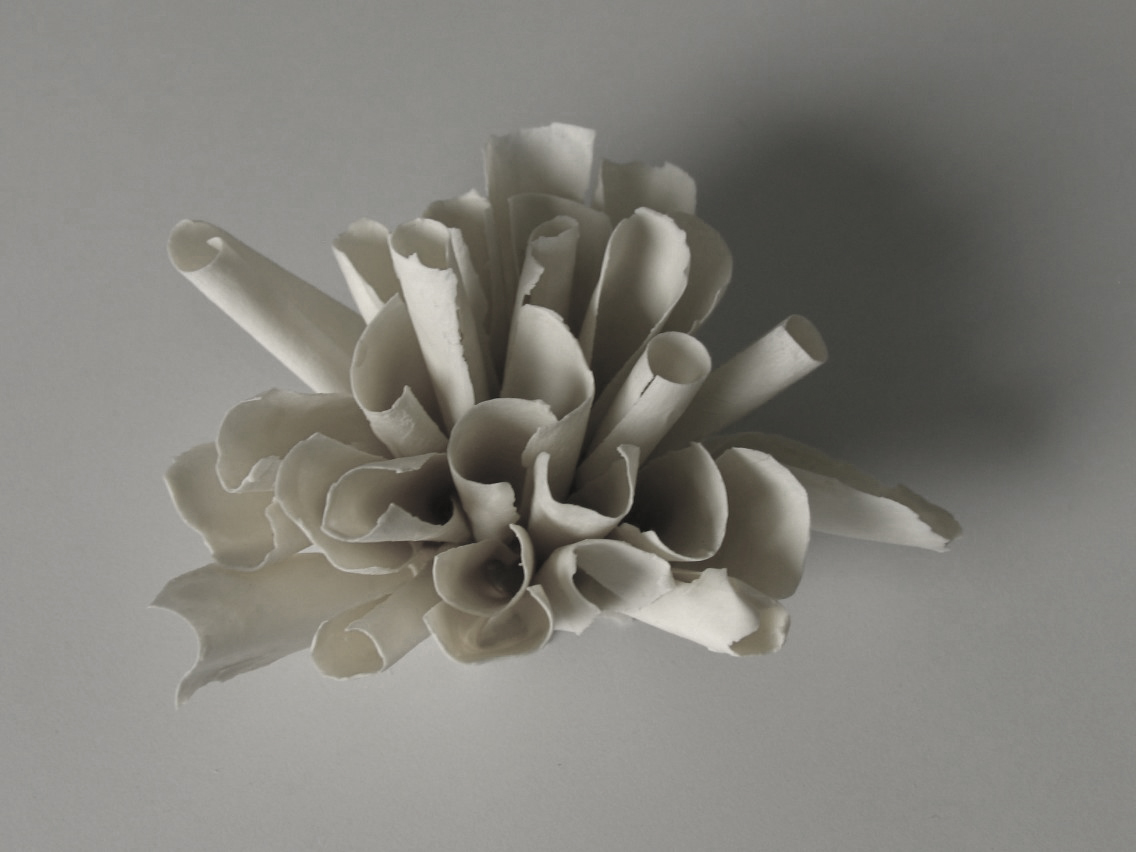
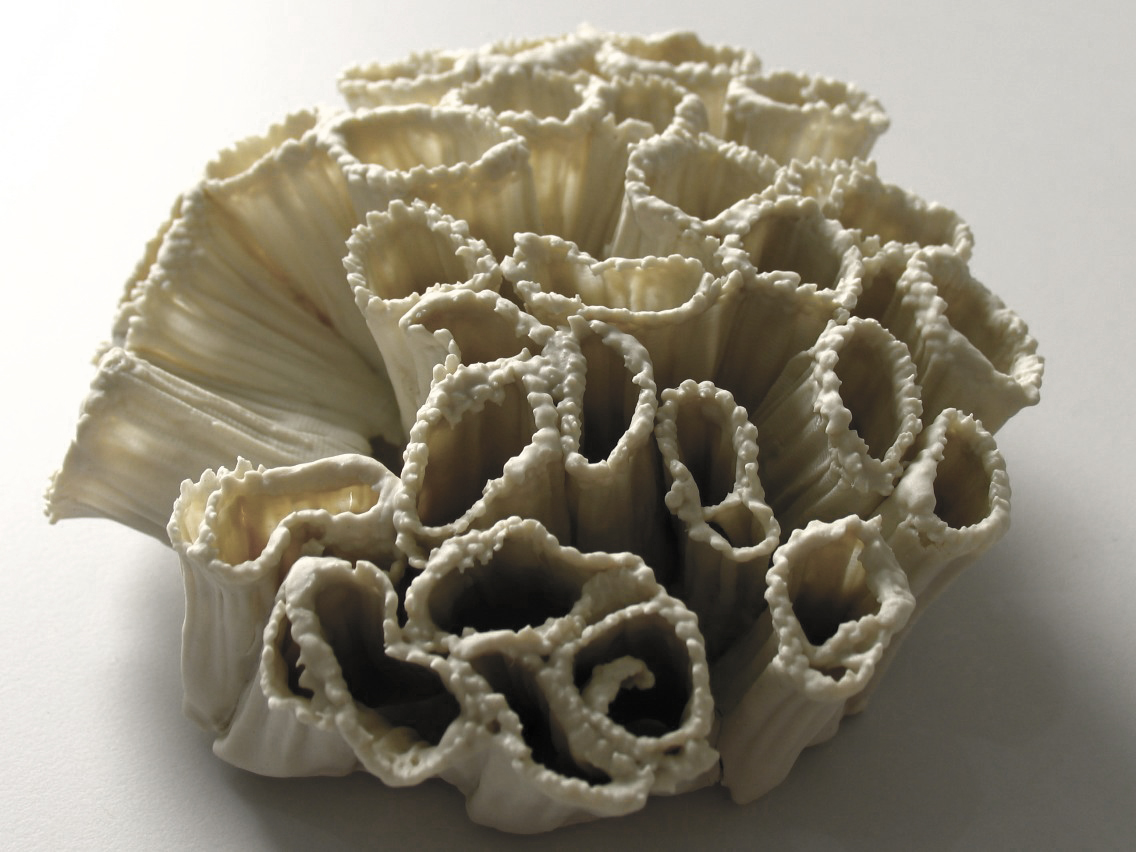
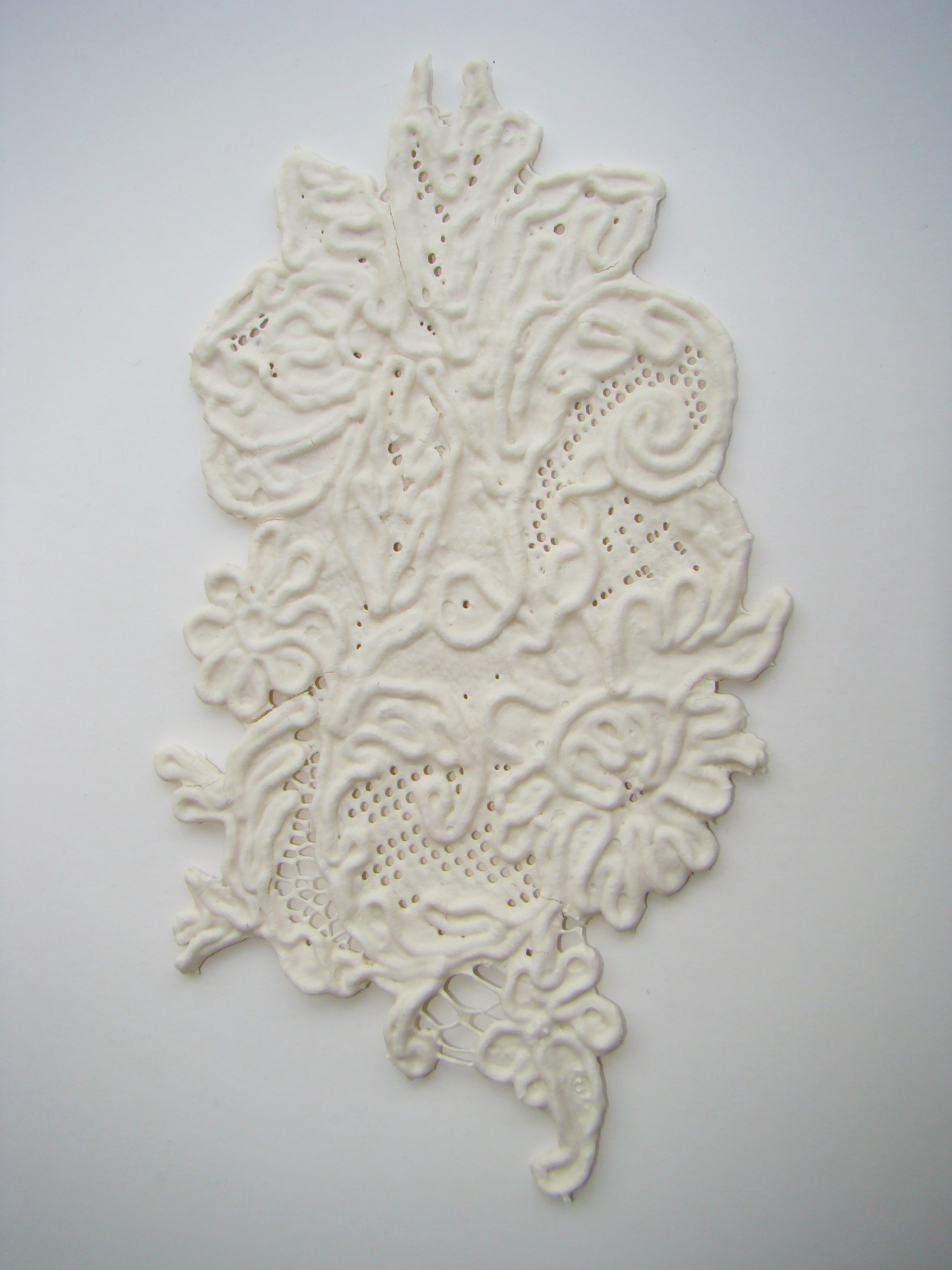
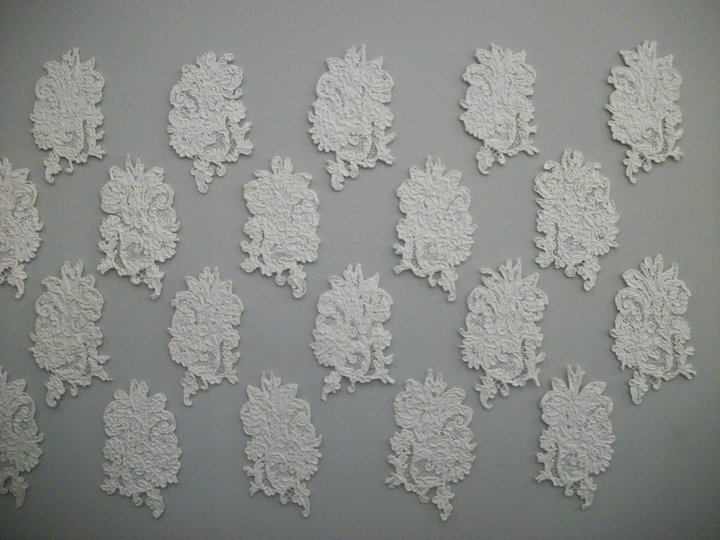
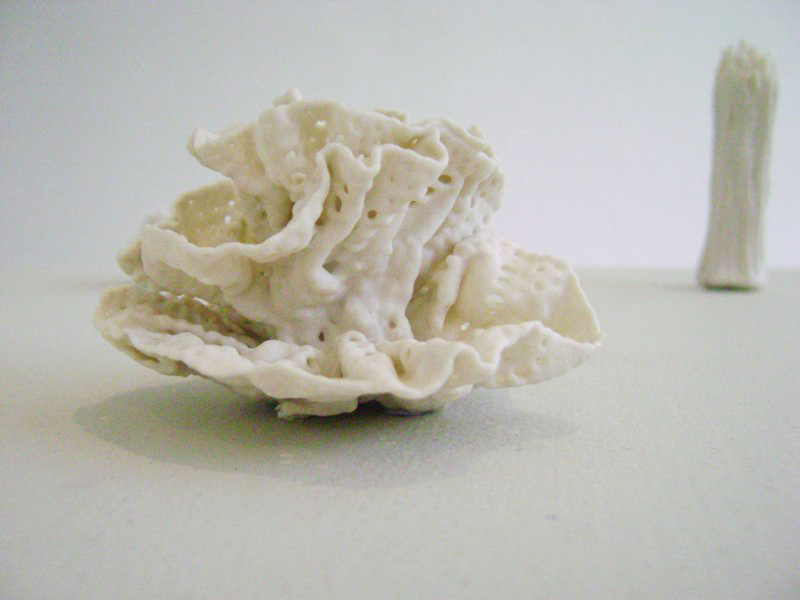
Haciendo uso de la técnica del papel cerámico, y jugando con la idea de la cerámica textil, tomé piezas y materiales propios de la costura y los fui cosiendo y tejiendo. Luego fueron bañados por porcelana fluida, que al ser quemada se convirtió en un exoesqueleto de esas formas, logrando traslucidez y liviandad.

This was made using ceramic paper technique and diving into the idea of textile clay. I took pieces and materials from seam, then sewed and knotted them. Afterwards, they were coated with fluid porcelain. When burnt, the porcelain became an exoskeleton of these shapes, achieving translucency and lightness. 

Embebidas: hacia una suspensión de la metamorfosis

Lorena González, 2009

En un papel de tres pies cuadrados, la parte (visiblemente) pintada no ocupa más de un tercio. En el resto del papel, parece que no hubiera imágenes; y sin embargo, las imágenes tienen allí una existencia eminente. Así, el vacío no es la nada. El vacío, es el cuadro.
CHANG SHIH
Antiguamente, en la práctica general de la pintura china, la ausencia del claroscuro a la hora de otorgar verosimilitud a las formas se debe a que la sombra debe estar incluida en el gesto mismo de la pintura, en la acción del artista en el momento de pintar. François Cheng en su libro Vacío y Plenitud aclara que la acción pincel-tinta constituye uno de los puntos fundamentales de la pintura oriental, la pincelada es el ejercicio activo del espíritu, la transferencia del movimiento de la vida y la muerte en el ánimo del cuadro, siendo el negro de la tinta y el movimiento del pincel, junto a la consciencia del desenvolvimiento orgánico del mundo, el conjunto de acontecimientos necesarios para que en el cuadro puedan revelarse todas las gamas, todas las formas, todos los volúmenes y todo el proceder de los diez mil seres y las diez mil cosas.
Actualmente, el pensamiento en torno al desarrollo que en las últimas tres décadas ha tenido el arte conceptual, se encuentra muy cerca de estas consideraciones filosóficas que rodearon durante tantos siglos el desarrollo de la pintura oriental. El proceder de tendencias como el minimalismo, e incluso de prácticas relacionadas con movimientos como el cinetismo, tienen su hilo conductor justamente en la disminución de los recursos dentro del ejercicio artístico, para, a través de la idea y de las diversas estructuraciones seriales y/o depurativas de la misma, revelar el desplazamiento de un ánima propia y subyacente, inmanente al desenvolvimiento de los seres y distanciada de la grandilocuencia representativa tan propia del arte occidental y de la cultura visual contemporánea.
La obra reciente de Isabel Cisneros, respira al alimón de estas consideraciones, tan distantes en el tiempo y en el espacio como cercanas en la acción que internamente las moviliza. Con el título Embebidas, Cisneros ha reunido un inquietante cuerpo de trabajo, donde los procesos del ejercicio cerámico le han servido para engranar una suerte de nuevas especies representativas, pequeños gestos volumétricos que desprendidos de la acumulación serial-reflexiva de sus propuestas anteriores, se han dirigido hacia la suspensión de sus propias metamorfosis formales. A través de un largo proceso depurativo, la artista parte del engranaje de módulos textiles diversos, realizando la labor del tejido previamente a la de la quema. Posteriormente, estos tejidos son enlazados en una forma definitiva, la cual es sellada a través de la inmersión de las mismas en barbotina de porcelana. Luego, colocadas en rejillas, las piezas son bañadas una y otra vez o repintadas con un pincel muy cargado. Mientras se van secando, el proceso continúa por varios días en la limpieza del goteo, las pinceladas y las burbujas, hasta que adquieren una consistencia más firme que permite insertarlas en varias quemas a distintas temperaturas.
El resultado final deviene en un conjunto de formas tan presentes como ausentes donde la agitación del tejido ha quedado parcialmente detenida, volúmenes cuyo referente ha sido absorbido por el proceso mismo de elaboración. En cada pieza, el movimiento del material, su desplazamiento, su flexibilidad, su colorido y su ánima han sido asimilados por su propia invisibilidad, para fusionarse y revelarse en una apariencia distinta e inversa, parcialmente velada pero materialmente contentiva del dinamismo vital del referente oculto.
En este sentido, la obra reciente de Isabel Cisneros comporta varios de los lineamientos desarrollados en este texto: de las estrategias del arte conceptual, la artista amplía el uso de los procesos cerámicos para depurar e invertir problemáticas propias de los discursos de la representación, acción contemporánea con la que silencia, deconstruye y reinscribe el poder iconográfico y presencial de los elementos; del arte oriental, el solucionar las oposiciones vacío-lleno, luz-oscuridad, visible-invisible, no por la confrontación entre los pares, sino por la integración sutil de cada dupla; una suspensión reveladora del estado efímero de los materiales (cuerpos textiles, cuerpos acuosos, cuerpos evaporados, cuerpos volumétricos) que no sólo remite a un conjunto de metamorfosis propias de los procesos naturales y humanos, sino a la matriz interna de cadenas de sobrevivencia, de transformaciones y representaciones, de tensiones vitales en donde todos nos encontramos circular e inevitablemente inscritos.

Embebidas: towards a suspension of metamorphosis

On a three squared foot sheet of paper, the part which is (visibly) painted does not take up more than a third of the space. On the rest of the paper there do not seem to be any images; and nevertheless, the images all have a striking existence there. So, empty space is not nothingness. Empty space is the picture.
CHANG SHIH
In the Chinese painting of olden times, the absence of chiaroscuro, which makes forms appear life-like, is explained by the fact that shadow must be included in the very act of painting, in the artist’s movement as he paints. In his book Emptiness and Fullness François Cheng explains that the action of brush and ink is one of the fundamental elements of Oriental painting, that the brushstroke is the active exercise of the spirit, the transfer of the movement of life and death onto the painting’s own mood, where the black of the ink, the movement of the paintbrush and an awareness of the world’s organic development are the necessary combination of elements so that all shades, all forms, all volumes and the behaviour of the ten thousand beings and ten thousand things can be seen in the painting.
Nowadays, the ideas that have emerged about the development of Conceptual art over the last thirty years are very close to these philosophical musings, which surrounded Oriental painting throughout centuries. The use of styles such as Minimalism, and even movement-related practices, like Kinetic art, trace precisely back to the reduction of resources deployed within art with the aim of using the idea, and the various serial forms and/or refinements of it, to reveal the displacement of its own underlying spirit, which is inherent in the development of beings and far removed from the grandiloquent representations so typical of Western art and of contemporary visual culture.
Isabel Cisneros’ recent work is in tune with these ideas, which are as distant in time and space as they are interrelated in the way their inner mechanisms work. With the title Embebidas (which refers to the a process of soaking where one thing absorbs another), Cisneros has brought together an uneasy body of work in which she has used pottery techniques to combine what might be considered new forms of representation – minimal volumetric gestures which when separated from the serial-reflexive accumulation of her earlier works have shifted toward a suspension of their own formal metamorphoses. Through a long process of refinement, the artist’s work is based on the combination of different fabric modules, where the weaving element takes place before the material goes into the kiln. These weavings are subsequently brought together in a final form which is sealed when it is dunked into porcelain barbotine. After that, the pieces are placed on grilles and bathed repeatedly then repainted with a heavily loaded brush. As they dry, the process continues for several days whilst the dripping, brushstrokes and bubbles are cleaned off until they attain a firmer consistency that allows them to be inserted into various kilns at different temperatures.
The final result is a group of forms which are present and absent in equal measures, in which the movement of the weave has been partially curbed and where there are volumes whose referent has been absorbed by their very process of elaboration. In each piece the movement of the material, its displacement, its flexibility, its colour and spirit have been assimilated by their own invisibility, so as to fuse these elements together and show their changed and inverse appearance, so that each piece is partially covered but is materially constituted by the vital dynamism of the hidden referent. I
n this sense, Isabel Cisneros’ recent work involves several of the ideas developed in this text: the artist broadens the use of pottery processes within the strategies of Conceptual art to refine or invert some of the issues concerning discourses of representation, a contemporary action which is used to silence, deconstruct and reinscribe the power of iconography and presence of the elements. She uses Oriental art, solving the opposites of empty-full, light-dark, visible-invisible by subtly integrating rather than confronting each duo and there is a telling suspension of the ephemeral state of materials (textiles, liquids, evaporated matter, volumes) which not only recalls a group of metamorphoses which are part of natural and human processes but also the inner mold of chains of survival, transformations and representations, of vital tensions in which we all find ourselves inscribed in a circular and inevitable form.

Acumulaciones

Un intercambio de materiales y técnicas de tejido entre Vicente Antonorsi y yo. 

An exchange of materials and knotting techniques between Vincente Antonorsi and myself.

Vicente Antonorsi e Isabel Cisneros. Acumulaciones.

Vicente Antonorsi e Isabel Cisneros.

Por Susana Benko. Art Nexus, # 66, Volumen 6, Pags. 141-2, septiembre-noviembre 2007

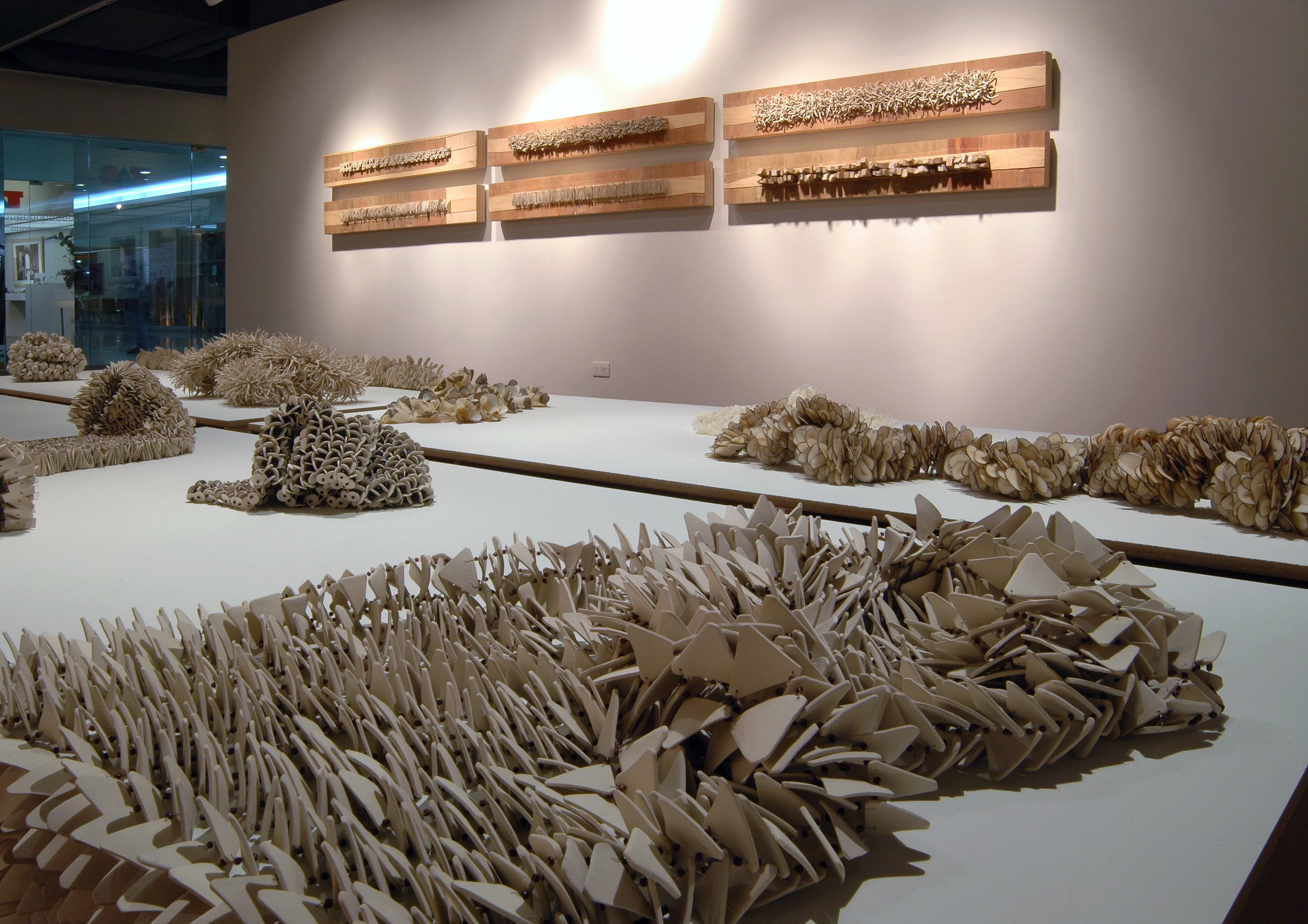
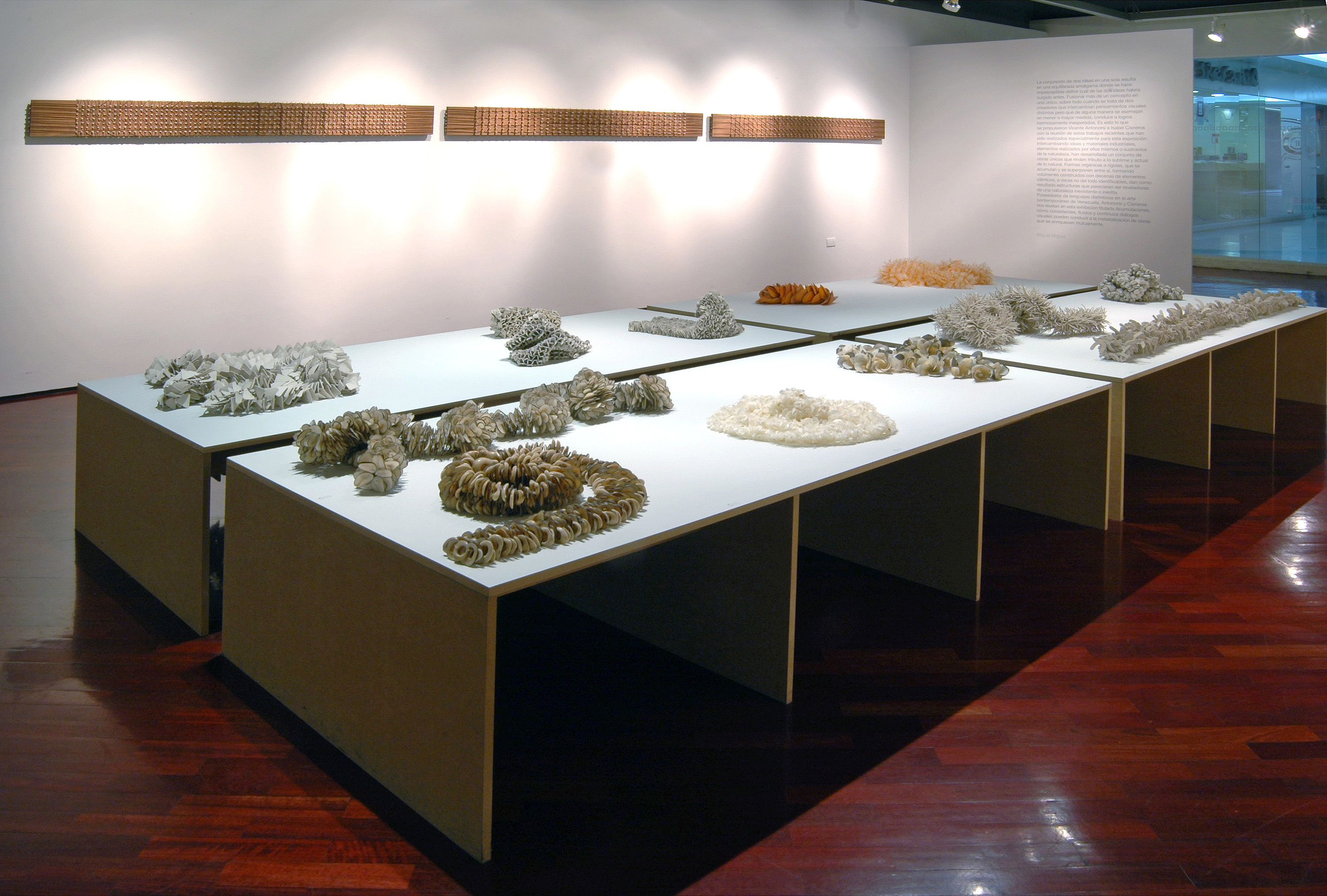
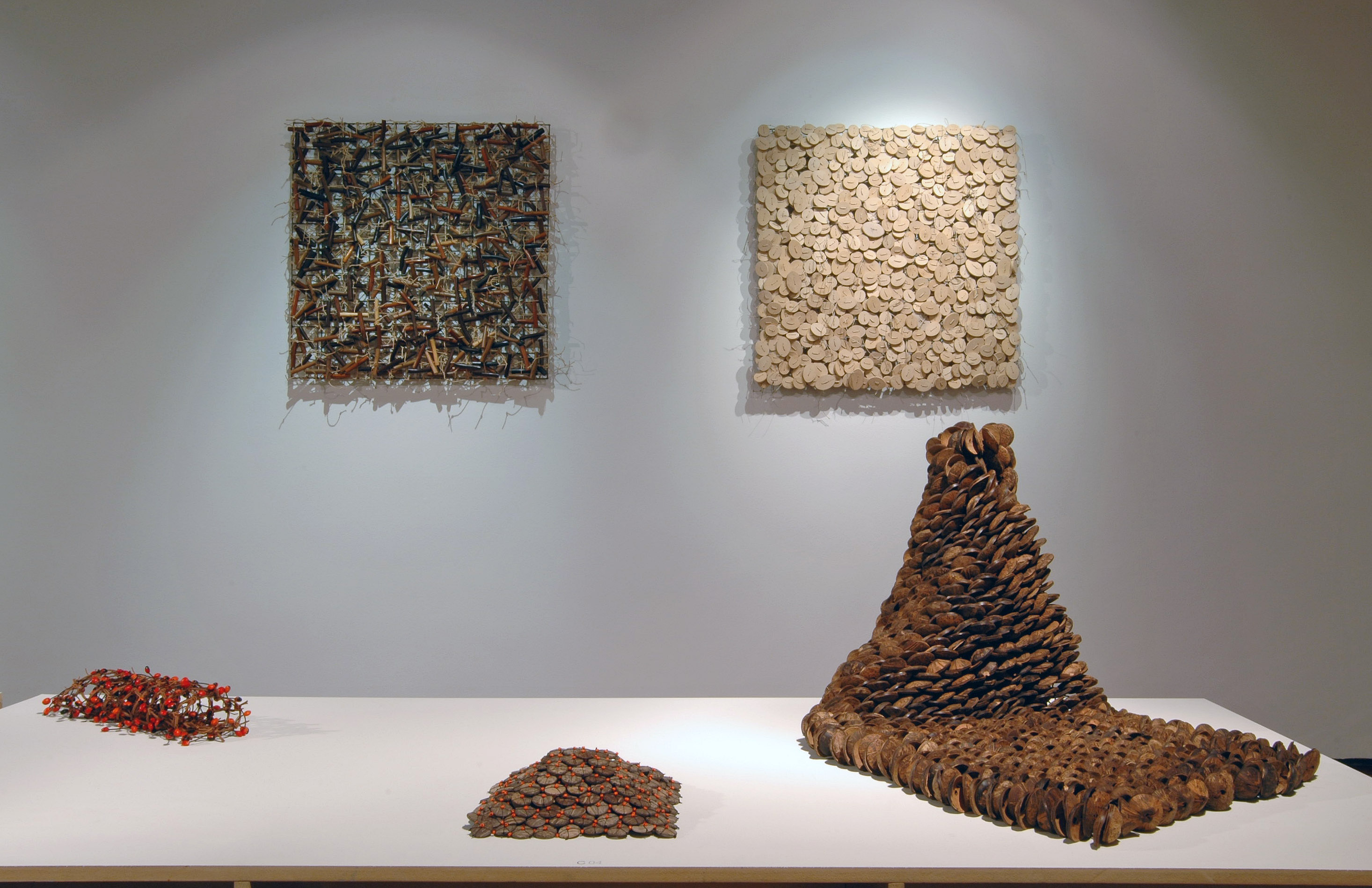
Some time ago, Vicente Antonorsi and Isabel Cisneros, visual artists with established careers in Venezuela, shared a vision of aggregating their individual experiences in order to experiment with and enrich their creative processes. They recognized their common ground: an almost sensual pleasure in matter and working with the accumulation and assemblage of small elements to generate two- or three-dimensional shapes. Under the guidance of the curator Miguel Miguel, this formal dialogue resulted in an exhibition titled ¿Acumulaciones, Diálogos Visuales: Vicente Antonorsi / Isabel Cisneros,¿ which was presented at Trasnocho Arte Contacto. 
Antonorsi is an architect, visual artist, and designer. He is intimately familiar with wood, on which he bases his impeccably designed furniture. His shapes also refer to primordial forms. Cisneros had her beginnings in ceramics, a medium she continues to use as she explores its potential in the field of sculpture. For this, she employs weaving and the assemblage of serialized elements created in clay. For their experiment, each artist became involved in the materials used by the other: Antonorsi explored ceramics while Cisneros experimented with wood, seeds, coconut shells, buttons, etc. ¿Neither or us would have come up with some of these works alone in our studios,¿ said Cisneros in an interview with the local press, while Antonorsi acknowledged he had been greatly pleased to be able to create his work ¿with her materials.¿ 
Even though their empathy is intense-both are passionate about the natural and the organic-their creative processes are individual and autonomous. Antonorsi retains an almost symmetrical order in his works, while Cisneros tends toward structures that are flexible and irregular. Yet there were works in which the authorship was difficult to assess, because of the experience of adopting the other artist’s procedures. 
Nature gave them the material for their work. They transformed these materials without distorting their essences and were respectful of their original appearances: a seed was not posited as something other than a seed, and the sea shells or coconut shards never ceased being what they were. The transformation of matter came through the way that the artists handled the materials and through the accumulation of small elements that comprised the sculptural forms. Antonorsi’s works were solid and imposing in their volume; Cisneros’s resembled zoomorphic, highly organic shapes. Both worked with artisanal techniques, such as the way that beads are threaded to form a necklace. At the same time, the artists’ systems generated three-dimensional structures that were highly distilled and rational. In sum, these works were rigorously ordered and had been created with formal discipline. 
The accumulation and assemblage of small elements implied abundance, yet at the same time this resource became a synthetic language. Both artists used it. This was the show’s curatorial message, which expressed the synthesis at which the artists arrived through a visual dialogue that emerged from the formal propositions that unite them. 
Cisneros and Antonorsi appropriated the products of nature. They extracted nature’s formal richness, but this quality also promoted a sense of belonging from which Venezuelan viewers could not subtract themselves. These were earth works, from a nature that is ours and that defines our environment.